Live through a couple of Dallas-Fort Worth winters and you know how fast the weather turns. One week we’re in the 70s, the next we’re in the teens. Those sudden cold snaps are when frozen and burst pipes stop being a hypothetical and start flooding people’s ceilings. At DRH Insurance Group, we get a steady stream of questions every January and February from DFW families who want to understand their coverage before the next arctic blast hits.
This guide walks you through what to expect in homeowners insurance burst pipes DFW winter freeze situations. We’ll cover what a typical homeowners policy tends to pay for, what it usually won’t, why DFW homes get hit so hard, and the practical things you can do to protect your home. The point is to get you informed first, so you can have a smarter conversation with an agent about your own situation.
Why burst pipes are such a big deal during a DFW winter freeze
Water damage is one of the most common and expensive problems a home can run into, and a single burst pipe can dump a shocking amount of water in a short time. When a supply line fails behind a wall or up in the attic, water can run through drywall, soak insulation, warp hardwood floors, and ruin furniture and electronics before anyone notices. By the time you spot the drip on the ceiling, the damage may already be done.
Up here in North Texas, the risk spikes during our occasional hard freezes. A lot of us remember stretches where temperatures stayed below freezing for days, and plumbers were booked solid across Dallas, Fort Worth, Arlington, Plano, Frisco, and the surrounding suburbs. When a long freeze hits a region that wasn’t built for it, you get a wave of burst pipes all at once.
Understanding homeowners insurance burst pipes DFW winter freeze coverage ahead of time matters because the middle of an emergency is the worst possible moment to learn how your policy works. Knowing what’s generally covered, what’s excluded, and what steps protect your claim can save you a lot of stress, money, and time. That’s why we put this together as something you can come back to each winter.
What homeowners insurance burst pipes DFW winter freeze coverage typically includes
Start with the good news. A standard homeowners policy in the Dallas-Fort Worth area generally covers water damage from a sudden and accidental event, and a pipe that freezes and bursts during a cold snap usually fits that description. The important words are sudden and accidental. When a pipe fails without warning because the water inside it froze and expanded, that’s typically the kind of loss these policies are built to handle.
Here’s what homeowners insurance burst pipes DFW winter freeze coverage commonly extends to, though every policy is different and you should confirm the details of your own:
- Damage to your home’s structure. Walls, ceilings, floors, and other built-in parts of the house the water harmed. If water from a burst pipe soaks through drywall and ruins your ceiling, that structural damage is generally the sort of thing coverage is built for.
- Damage to personal belongings. Furniture, electronics, clothing, rugs, and similar items damaged by the water are typically covered under the personal property portion of a homeowners policy.
- Access and tear-out costs. To fix a broken pipe, a plumber often has to cut into drywall, remove cabinetry, or pull up flooring. The cost to tear out and replace those materials so the pipe can be reached and repaired is commonly included.
- Loss-of-use or additional living expenses. If the damage is bad enough that your home becomes uninhabitable during repairs, your policy may help with temporary living costs. This coverage recognizes you may need somewhere to stay while contractors dry out and rebuild your home.
- Mold and mildew cleanup. When mold develops as a direct result of a covered burst pipe and you deal with it promptly, cleanup may be covered. Acting fast matters here, and we’ll come back to that.
To picture how this works, consider a composite of families we work with across DFW. Imagine a household in a two-story home where a supply line in the attic froze overnight during a hard freeze. By morning, water had come through the second-floor ceiling and down into the living room, soaking the drywall, the carpet, and a sofa. In a scenario like that, homeowners insurance burst pipes DFW winter freeze coverage would generally be expected to help with the damaged ceiling and flooring, the ruined sofa, the tear-out needed to reach and repair the line, and possibly the cost of staying elsewhere if the home wasn’t livable during repairs. This is a hypothetical composite, not a specific real claim, but it reflects the kinds of situations local homeowners actually hit.
What homeowners insurance burst pipes DFW winter freeze coverage usually does not include
Just as important as what’s covered is what typically isn’t. This is where a lot of confusion lives, and we’d rather you know the boundaries now than get surprised later. Here are the common exclusions to keep in mind.
The pipe itself
This one catches people off guard. Your policy generally covers the damage the water causes, but it usually won’t cover the cost to repair or replace the broken pipe itself. So if a frozen line bursts and floods your kitchen, the policy is designed to address the ruined cabinets and flooring, but the plumber’s charge for fixing the actual pipe is often on you. The distinction is between the failed component and the resulting damage.
Gradual leaks and long-term neglect
Insurance is built around sudden and accidental losses, not slow decay. If a pipe has been quietly seeping for months, or if corroded, outdated plumbing finally gives out from old age, that gradual damage is typically excluded. A hairline leak that slowly rots a cabinet floor over a year is a different animal than a line that bursts in one night during a freeze. The sudden and accidental standard is the dividing line in most policies.
Lack of reasonable care
This is a big one in winter, and it’s worth getting clear on. If a burst pipe can be traced back to a failure to take reasonable care of your home, a claim can be denied on the grounds of alleged negligence. The classic examples are leaving your home unheated during a freeze or not taking basic steps to protect exposed pipes. Turn the heat completely off, leave town during a hard freeze, come back to burst pipes, and you may have problems with a claim. The policy expects you to keep reasonable heat on and take sensible precautions. That’s exactly why the prevention steps later in this article matter so much, both for protecting your home and for protecting your claim.
External flooding
Standard homeowners insurance doesn’t cover flood damage that comes from outside the home, like rising water from heavy rain or an overflowing creek. That takes a separate flood insurance policy. Burst-pipe water damage from inside your home is a different category than external flooding, and the two are handled by different coverage. If flooding is a concern for your property, that’s a separate conversation worth having with an agent.
The simplest way to remember it: homeowners insurance burst pipes DFW winter freeze coverage is generally about sudden, accidental water damage from inside your home. It’s not a maintenance plan, it won’t pay for the pipe itself, and it’s no substitute for flood insurance.
Why DFW homes are especially vulnerable to a winter freeze
Homes in the Dallas-Fort Worth area, broadly speaking, weren’t built for long stretches of subfreezing weather the way northern homes are. Builders in colder regions routinely run plumbing through heated interior spaces and insulate heavily against sustained cold. In much of North Texas, construction reflects our usually mild winters, which creates specific weak points when a serious freeze shows up.
Here are the common weak spots we see in DFW homes:
- Pipes in uninsulated attics. Supply lines routed through attic spaces can be exposed to outside temperatures with little protection. When the attic drops below freezing, those lines are at real risk.
- Pipes in exterior walls. Plumbing that runs through outside-facing walls has less of the home’s warmth around it and can freeze when temperatures plunge.
- Unheated garages. Water lines and water heaters in a garage usually sit in an unconditioned space. A garage can get very cold during a freeze even when the house interior stays warm.
- Outdoor faucets and hose bibs. These are directly exposed to the elements and are often the first to freeze if hoses are left attached.
Because of these design realities, a cold snap that would be a non-event in a northern city can cause widespread burst pipes across DFW. The homes simply weren’t built with long, deep cold in mind. That’s not a flaw you did anything to cause, but it does mean our region has to stay ahead of it each winter. Understanding homeowners insurance burst pipes DFW winter freeze coverage is only half the picture. Prevention is the other half, and most of it is within your control.
How to prevent frozen pipes before the next DFW winter freeze
The best claim is the one you never have to file. Prevention also matters because, as we covered above, failing to take reasonable care can affect whether a claim is honored. The good news is that most of these steps are cheap and take only a little time. We’d tackle them before the first hard freeze warning, not during it.
Insulate your exposed pipes
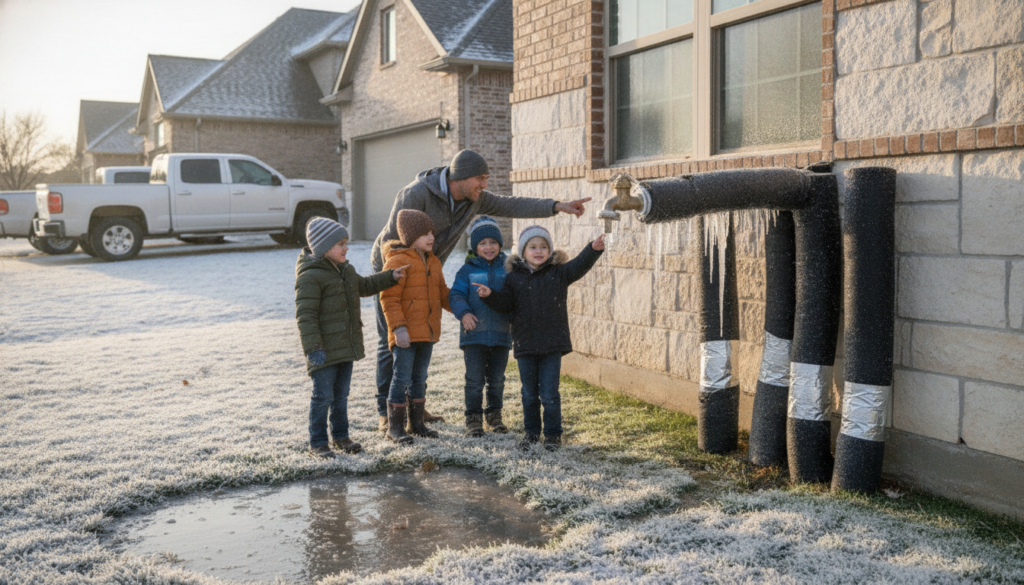
Wrap pipes in unheated areas, like the attic, garage, and any crawl spaces, with foam pipe insulation or heat tape. Both are easy to find at local hardware stores. Pay extra attention to any plumbing that runs along exterior walls or through spaces that aren’t heated. This single step covers the most common failure points in DFW homes.
Drip your faucets during a hard freeze
When a hard freeze is in the forecast, let a slow, pencil-thin stream of water run from your faucets, especially those on exterior walls. Moving water is much less likely to freeze than water sitting still in a pipe. Running a slow drip overnight through the coldest hours is a simple habit that has saved countless DFW homes.
Open your cabinet doors
Open the cabinet doors under kitchen and bathroom sinks so warmer indoor air can get around the pipes. This helps most for sinks on exterior walls, where the plumbing sits more exposed to the cold.
Keep the heat on
Hold your thermostat at a steady setting, ideally no lower than 55 to 60 degrees, even when you leave. Resist the urge to shut the heat off completely to save energy while you travel over the holidays. A warm home protects your pipes, and keeping reasonable heat on is part of the reasonable care your policy expects.
Seal air leaks
Cold air sneaks in through gaps and cracks around windows, doors, and utility openings. Sealing those leaks keeps cold air away from vulnerable plumbing and makes your home easier to heat during a freeze. A few tubes of caulk and some weatherstripping go a long way.
Know your main water shut-off valve
Find your home’s main water shut-off valve before you ever need it, and make sure it actually turns. In a burst-pipe emergency, every minute counts, and knowing exactly where to go to stop the water can dramatically cut the damage. Show the rest of your household where it is too.
Disconnect your garden hoses
Before a freeze, disconnect garden hoses and drain the water from outdoor faucets. A hose left attached can trap water that freezes and backs up into the pipe behind the wall, causing a failure you can’t see from outside.
Doing these things each winter is the most effective way to cut your risk. It also helps show you took reasonable care, which matters if you ever do need to lean on homeowners insurance burst pipes DFW winter freeze coverage. A little preparation protects your home and your peace of mind.
What to do immediately if a pipe bursts
Even with the best preparation, pipes can still fail in an extreme freeze. If it happens to you, staying calm and moving fast makes a real difference. Here’s the order of operations we walk DFW homeowners through.
1. Shut off the main water supply
Go straight to your main water shut-off valve and turn it off. This stops more water from pouring into your home and is the single most important thing you can do to limit the damage. That’s why knowing where that valve is ahead of time matters so much.
2. Turn off electricity to affected areas
If water is near outlets, light fixtures, or electrical panels, cut the power to those areas for safety. Water and electricity are a dangerous combination, so don’t take chances. If you’re unsure whether it’s safe, stay clear and call a professional.
3. Document everything
Before you start cleaning up, take plenty of photos and videos of the damage. Capture the affected rooms, the water, the ruined belongings, and the overall scene. Thorough documentation supports your claim. Don’t throw away damaged items until your insurance company has had a chance to review them, since they may need to be inspected as part of the process.
4. Call a plumber for emergency repairs
Get a licensed plumber out to repair the broken pipe. During a widespread DFW freeze, plumbers are slammed, so call as early as you can. Keep your receipts and any paperwork tied to the repairs.
5. Notify DRH Insurance Group
Contact our team as soon as you can to start the claims process. The sooner we know, the sooner we can help you understand your next steps and what your policy may cover. We’re local, we know the DFW area, and we’ll walk through the process with you instead of leaving you to figure it out alone.
6. Take reasonable steps to prevent further damage
Your policy generally expects you to limit additional damage once a loss happens. That means moving valuables out of harm’s way, mopping up standing water, and starting to dry out affected areas with fans or towels. You don’t need to attempt major repairs yourself, but basic steps to keep the problem from getting worse are both practical and expected. Keep receipts for anything you buy, like fans or shop vacs, since those costs may be relevant to your claim.
Following these steps protects your home and strengthens your position when you lean on homeowners insurance burst pipes DFW winter freeze coverage. Quick, documented, reasonable action is always the goal.
A special note for DFW renters and condo owners
If you rent your home or apartment in the Dallas-Fort Worth area, the coverage picture looks a little different, and this is a point we want renters to get. When a pipe bursts in a rental, the property owner’s insurance generally covers the building itself. But that policy doesn’t cover your personal belongings. Your furniture, electronics, clothing, and other possessions are only protected if you carry your own renters insurance.
We talk to plenty of renters who assume their landlord’s policy will take care of everything, then learn after a loss that their personal property was never covered. A separate renters policy is designed to fill exactly that gap, and it can also include loss-of-use coverage if a burst pipe makes your unit temporarily unlivable. If you rent anywhere in DFW, this is worth raising with an agent before winter arrives.
Condo owners have their own layered situation. In a condo, the association’s master policy typically covers certain parts of the building, while your individual condo policy handles the interior and your belongings, depending on how responsibilities are split. Burst-pipe water damage in a condo can involve both policies, which is why it helps to understand where your coverage starts and the association’s ends. These are good questions to bring to a conversation with your agent so there are no surprises during a freeze.
Common questions we hear about homeowners insurance burst pipes DFW winter freeze coverage
Over the years, the same questions come up again and again from DFW homeowners. Here are a few themes worth addressing, since they reflect real confusion we see.
Does it matter how long my home was left unheated?
It can. The reasonable-care standard is central to how these claims get evaluated. If a home was left with no heat during a freeze and pipes burst as a result, that can raise questions of negligence. Keeping reasonable heat on and taking basic precautions is both good practice and important for protecting your coverage.
What is the difference between the water damage and the pipe repair?
This is probably the most common source of surprise. Homeowners insurance burst pipes DFW winter freeze coverage is generally aimed at the damage the escaping water does to your home and belongings, plus the tear-out needed to reach the pipe. The cost to actually repair or replace the broken pipe is typically not covered. Keeping those two straight in your head helps set realistic expectations.
How quickly should I report a burst pipe?
As soon as it’s safe to, once you’ve shut off the water. Prompt reporting matters, and so does prompt cleanup, especially with mold. Mold cleanup is more likely to be covered when it stems directly from a covered burst pipe and gets handled quickly rather than left to spread.
Will I owe a deductible?
Homeowners policies generally include a deductible, which is the amount you’re responsible for before coverage applies to a covered loss. The specifics depend on your individual policy. This is a good detail to confirm with your agent so you know what to expect before a claim ever happens.
Let’s talk through your options before the next freeze
Winter in Dallas-Fort Worth is unpredictable, and burst pipes are one of the more common and costly surprises our region faces when a hard freeze settles in. The more you understand about how homeowners insurance burst pipes DFW winter freeze coverage works, what it typically includes, where its limits are, and how to head off problems in the first place, the better prepared you’ll be when the temperature drops.
Every home and every policy is a little different, so the smartest move is to review your specific coverage before you need it. If you want to understand what your current policy covers, look at your options for a homeowners, condo, or renters policy, or just ask questions about getting your DFW home ready for winter, our team at DRH Insurance Group is here to help. We’re local, we speak plain English, and we’re happy to go through the details with you so you can head into winter feeling ready. Reach out whenever you’re ready to talk it through.
Frequently asked questions
Does homeowners insurance cover burst pipes from a DFW winter freeze?
A standard homeowners policy generally covers water damage from a pipe that freezes and bursts, because that counts as a sudden and accidental event. Coverage typically applies to the damage to your home’s structure and belongings, though every policy is different. Reach out to confirm the specifics of your own policy.
Will my policy pay to repair the broken pipe itself?
Usually not. Homeowners insurance is generally designed to cover the water damage the burst pipe causes, along with the tear-out needed to reach it, but not the cost to repair or replace the pipe itself. That repair is typically the homeowner’s responsibility.
Can my burst pipe claim be denied if I left the heat off?
It can. Policies expect you to take reasonable care of your home, which includes keeping heat on and protecting exposed pipes during a freeze. Leaving a home unheated during a hard freeze can lead to a claim denial based on alleged negligence.
What should I do first when a pipe bursts in my DFW home?
Shut off your main water supply right away to stop more water from flooding in, then cut the power to any affected areas for safety. Document the damage with photos and videos, call a plumber, and notify your insurance team to start the claims process. Take reasonable steps to prevent further damage while you wait for help.
Does renters insurance cover my belongings if a pipe bursts in my apartment?
The property owner’s insurance generally covers the building itself, but it does not cover your personal belongings. Your furniture, electronics, and other possessions are only protected if you carry your own renters insurance. A renters policy may also help with temporary living costs if your unit becomes unlivable.
How can I prevent frozen pipes during a DFW cold snap?
Insulate exposed pipes in attics, garages, and exterior walls, let faucets drip during a hard freeze, and open cabinet doors so warm air reaches the plumbing. Keep your thermostat set to a steady temperature, disconnect garden hoses, and know where your main water shut-off valve is. These steps cut your risk and help show you took reasonable care of your home.