A real story explains insurance better than any brochure. So today I want to walk you through one that happens in Dallas-Fort Worth homes more often than you’d think. It involves a local family I’ll call the Millers, a gorgeous kitchen remodel, and one phone call that made sure all that work was actually protected. The Millers are a composite of families we work with, with details changed, but the lesson is real.
If you’re planning a renovation or just wrapped one up, this is the kind of situation I help DFW homeowners think through every week. My name is Dhyana Newton, and my team at DRH Insurance Group works with families across the Metroplex on auto, home, and life coverage. Let’s get into it.
Meet the Millers and Their Dream Kitchen
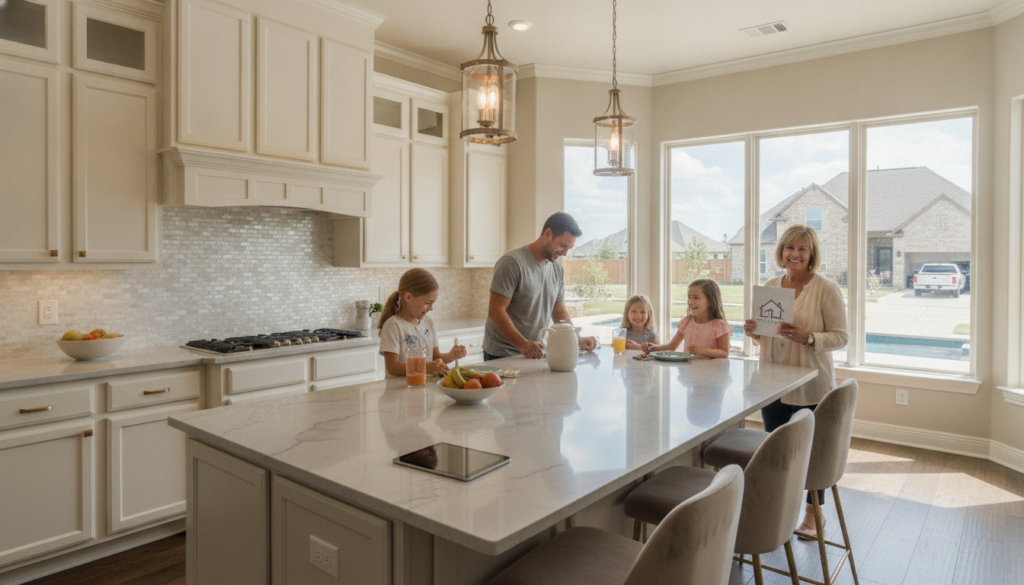
The Millers own a comfortable home in an established Dallas neighborhood. Like a lot of families, they’d been talking about updating their kitchen for years. The old layout had builder-grade cabinets, a laminate countertop past its prime, and appliances that were slowly quitting on them. When they finally saved enough and found a contractor they trusted, they went all in.
By the time the project wrapped, the change was dramatic. They’d added custom cabinetry, quartz countertops, a large center island, upgraded plumbing fixtures, new recessed lighting, and a set of high-end stainless steel appliances. They also refinished the flooring that ran through the kitchen and into the adjoining dining area. It was the kind of remodel that turns a house into the house where everyone gathers for the holidays.
What the Millers didn’t realize is that their beautiful new kitchen had quietly changed something important. It changed the amount of money it would take to rebuild their home if disaster ever struck. That’s the exact gap a conversation about homeowners insurance after a remodel is meant to close.
Why a kitchen remodel is a bigger deal than it looks
Here’s what most homeowners miss in the excitement of a finished project. A kitchen remodel makes your home prettier and more useful, sure. It also often raises your home’s replacement cost, which is the amount it would take to rebuild your home with similar materials and quality after a covered loss like a fire.
Think about what the Millers added. Custom cabinetry costs far more to replace than the basic cabinets they tore out. Quartz and stone countertops run higher than laminate. Better appliances, better lighting, and refinished floors all carry a higher rebuild value. If a covered loss ever damaged that kitchen, putting it back the way it is now would cost a lot more than it did before the remodel.
The problem? Their homeowners policy was still built around the old kitchen. That’s where reviewing your homeowners insurance after a remodel earns its keep.
The quiet risk of being underinsured
When your policy’s dwelling coverage limit is lower than what it would actually cost to rebuild your home, you’re what we call underinsured. It’s one of the most common coverage gaps I see in Dallas-Fort Worth, and renovations are one of the biggest reasons it happens.
Picture a covered event, say a kitchen fire, that does serious damage. If your dwelling coverage limit still reflects the old, pre-remodel version of your home, the money available to rebuild may fall short of what your new kitchen actually costs to restore. You could end up covering a big chunk of that difference yourself, right after you drained your savings on the remodel. That’s a painful spot to be in, and it’s completely avoidable.
This is why I encourage every homeowner to think about their homeowners insurance after a remodel the moment a project is done, or even as it nears the finish line. You don’t want to find the gap during a claim. You want to close it long before anything goes wrong.
Why this matters even more in DFW right now
Dallas-Fort Worth has had years of rising property values and rising construction costs. Both push replacement costs up, sometimes faster than homeowners realize. Even without a renovation, the cost to rebuild a DFW home today can run higher than it did a few years ago, simply because labor and materials cost more.
Now put a major remodel on top of that. The Millers weren’t only keeping pace with rising rebuild costs. They were adding value and higher-end finishes that pushed their replacement cost up further. In a market like ours, letting your policy fall out of step with your home’s true rebuild value carries more risk than it might have a decade ago. A review of your homeowners insurance after a remodel helps keep your coverage in line with both the remodel and the market.
The phone call that changed everything
The Millers did one smart thing. About a week before their contractor’s final walkthrough, Mrs. Miller called our office. She wasn’t even sure she needed to. Her exact words were something like, “We just finished the kitchen. Is there anything on the insurance side we should think about, or are we fine?”
That single question is the whole ballgame. Plenty of homeowners assume their policy adjusts on its own, or figure they’ll handle it at their annual renewal. Waiting for renewal can leave a gap open for months. Calling early is exactly the right move, and it’s the heart of how I handle homeowners insurance after a remodel for every family I work with.
Here’s roughly how our conversation went and what we walked through together.
Step one: understanding what actually changed
The first thing I do is get a clear picture of the project. I asked the Millers about the specifics:
- What did the remodel include? (Cabinetry, countertops, appliances, flooring, lighting, plumbing fixtures.)
- Were any of the materials high-end or custom rather than standard builder-grade?
- Did the project change the home’s square footage, or was it a refresh within the existing footprint?
- Were there any structural, electrical, or plumbing upgrades behind the walls?
- Did they add any new features that could affect liability, like a wet bar, a pool, or anything major beyond the kitchen?
The Millers’ project stayed within the existing footprint, which kept things simpler, but the quality of the finishes jumped. That jump in quality is precisely what drives replacement cost higher. Getting these details on the table is step one of any good homeowners insurance after a remodel review.
Step two: recalculating the replacement cost
Once I understood the scope, the next step was working with the carrier to recalculate the home’s estimated replacement cost. That figure drives the dwelling coverage limit, and it needed to reflect the new kitchen, not the old one.
The goal is simple. The dwelling coverage limit should be enough to rebuild the home as it exists today, upgraded finishes and all. For the Millers, the new replacement cost estimate came in higher than the old one. That’s expected and completely normal after a substantial remodel. It’s not a penalty. It’s the policy catching up to reality so the family has the protection they paid to build.
Let me be clear about something. I never tell a homeowner exactly what limits to carry. My job is to lay out the recalculated replacement cost, explain what it means, and let you decide with full information. That’s the whole philosophy behind homeowners insurance after a remodel. Educate first, then let the family choose.
Personal property, appliances, and the details people forget
Dwelling coverage was the big one, but not the only thing we discussed. A kitchen remodel usually brings new personal property into the home, and that deserves a look.
The Millers had bought several new appliances and some furnishings for the adjoining dining space. Appliances can sit in a bit of a gray area depending on how they’re installed and how a policy treats them, so it’s worth talking through. During our homeowners insurance after a remodel review, I made sure the Millers understood how their personal property coverage worked and whether their existing limits still made sense given their newer, higher-value belongings.
We also talked about a few practical habits that make life easier down the road:
- Keep your receipts and contracts. The Millers held onto every invoice from their contractor and every appliance receipt. If they ever file a claim, that paperwork helps show exactly what was in the home and what it cost.
- Take photos and video. A simple walkthrough video of the finished kitchen, drawers open and appliances visible, is one of the most useful and least expensive things you can do.
- Store it somewhere safe. Cloud storage or email works well, so the records survive even if something happens to the house itself.
None of this is glamorous, but it’s the kind of small effort that pays off if you ever need it. Good documentation is a quiet superpower, and it goes hand-in-glove with keeping your homeowners insurance after a remodel current.
What about liability?
We touched on liability too. The Millers didn’t add a pool or anything that changes their risk profile much, so this part was simple for them. But it’s worth mentioning because it comes up often. Certain additions, like a swimming pool, a large deck, or an outdoor kitchen, can increase liability exposure by creating new ways someone could get hurt on your property. If your renovation adds features like that, it’s smart to review your liability limits as part of the overall conversation.
Coverage during the project: what the Millers learned for next time
The Millers called after their project was basically finished, which worked out fine for them. But our conversation drifted to what they should think about before and during the next one, because they’re already dreaming about a primary bathroom remodel.
For larger renovations, a few things are worth understanding up front. Here’s what I shared with them, and what I’d share with any DFW homeowner heading into a big project.
Verify your contractor’s insurance
Before work begins, ask your contractor for proof of their own insurance, including liability coverage and workers’ compensation. A reputable contractor hands this over without any fuss. It protects you if something goes wrong or someone is injured on the job. It’s one of the simplest and most overlooked steps in any renovation.
Ask about Builder’s Risk and coverage gaps during construction
Standard homeowners policies aren’t always built to cover a home that’s actively under major construction, especially if the project is substantial or you temporarily move out during the work. For bigger jobs, a common rule of thumb is to pay extra attention when the renovation runs past roughly ten percent of your home’s value, or when the home will sit vacant while work goes on. In those cases, homeowners sometimes look into Builder’s Risk coverage, which is designed for property during construction.
I’m not going to tell you that you definitely need it for every project. That depends entirely on your situation. What I will do is help you understand whether your standard policy has gaps during construction so you can make an informed choice. It’s one more reason to loop in your agent early, ideally before demolition starts, rather than only revisiting your homeowners insurance after a remodel once the dust settles.
If you move out temporarily
Some larger remodels mean living elsewhere for a stretch. A home that’s unoccupied can be treated differently under a standard policy, sometimes triggering vacancy-related limitations. If you’re planning to move out during a project, tell your agent. It’s a quick conversation that can head off an unpleasant surprise, and it’s the kind of thing I’d rather catch ahead of time than explain during a claim.
Do renovations always raise your premium?
This is one of the most common questions I hear, so let’s take it head-on. The short answer is that it depends on the renovation.
Major upgrades that raise your home’s insured value, like the Millers’ high-end kitchen, generally tend to raise premiums, because there’s more value to protect and it costs more to rebuild. That’s the trade-off, and it’s a fair one. You spent real money to add real value, and you want that value protected. I won’t quote numbers here, because premiums depend on countless individual factors and I can’t promise any specific figure.
At the same time, not every renovation moves costs the same direction. Some improvements can work in your favor with certain carriers. Upgrades like a new roof or updated electrical and plumbing can reduce risk by making the home safer and less prone to certain kinds of damage. Whether and how that affects your specific policy is a conversation to have with your agent, but it’s worth knowing that renovations aren’t automatically bad news for your bottom line.
Here’s the honest, agent’s-eye view. The point of updating your policy isn’t to chase a lower price or dread a higher one. The point is accuracy. You want a policy that reflects your home as it truly exists, so that if the worst happens, you’re actually covered. That accuracy is the whole reason a homeowners insurance after a remodel review exists.
How the story ended for the Millers
After our conversation, the Millers had their replacement cost recalculated to reflect the new kitchen, reviewed their updated dwelling coverage limit, and confirmed their personal property coverage still fit their needs. I made sure they got the reassessment results in writing, and we walked through the updated policy documents together so they understood exactly what changed and why.
That last part matters a lot to me. When you make a change to your homeowners insurance after a remodel, always ask for the results in writing and actually read the updated declarations page or endorsement. Confirm that the new dwelling coverage limit lines up with the post-renovation replacement cost. Ask questions about anything that doesn’t make sense. A good agent will happily walk through it with you until it’s clear.
The best part of the Miller story is how uneventful the ending is. Nothing dramatic happened. No fire, no disaster, no claim. They just have the quiet confidence of knowing the kitchen they poured their hearts into is protected to its true value. That peace of mind is the whole goal, and it started with a five-minute phone call.
A simple checklist for your own remodel
If you’re a DFW homeowner planning or finishing a renovation, here’s a plain-English checklist you can use. Think of it as the shortlist version of everything above.
- Call your agent early. Reach out as the project nears completion, or even before it starts for larger jobs. Don’t wait for your annual renewal.
- List everything that changed. Cabinetry, counters, appliances, flooring, fixtures, square footage, structural work, and any new features.
- Ask for a replacement cost recalculation. Make sure your dwelling coverage limit reflects the home as it exists now.
- Review your personal property coverage. New appliances and furnishings may be worth a second look.
- Consider liability if you added features like a pool or outdoor kitchen.
- For big projects, ask about coverage during construction and Builder’s Risk, especially if you’ll move out temporarily.
- Verify your contractor’s insurance before work begins.
- Document everything. Save receipts, contracts, and photos or video of the finished work in a safe place.
- Get the results in writing and read your updated policy to confirm the new limits match your post-remodel replacement cost.
Run through that list and you’ll be in far better shape than most homeowners. It’s the same framework I use whenever I help a family think through their homeowners insurance after a remodel.
Why local, plain-English guidance makes a difference
Insurance can feel intimidating, full of terms like “replacement cost,” “dwelling coverage,” and “endorsement” that don’t mean much until someone explains them in normal language. That’s what I try to do every day at DRH Insurance Group. I’d rather have an honest conversation about your actual home and your actual life than hand you a stack of paperwork and wish you luck.
DFW is its own kind of market. Rising property values and construction costs make it genuinely important to keep policies aligned with what homes really cost to rebuild today. A remodel only sharpens that. When you work with a local agent who knows the area, you get guidance grounded in what’s happening in Dallas-Fort Worth, not a script read from a call center a thousand miles away. That local perspective sits behind every homeowners insurance after a remodel conversation I have.
And to be completely clear, none of this is about selling you more than you need. It’s about making sure your coverage tells the truth about your home. Sometimes that means nudging a limit up. Sometimes it means reassuring you that you’re already in good shape. Either way, you walk away knowing where you stand.
Whether your remodel is big or small
Maybe you’re not planning a full kitchen gut like the Millers. Maybe you’re finishing a garage, adding a bathroom, updating a room, or building a backyard project. The same principle applies. Any change that affects your home’s value, its rebuild cost, or its risk profile is worth a quick review. The bigger the project, the more important that conversation becomes, though even smaller upgrades add up over time.
The Millers’ story is a happy one precisely because they took a simple, proactive step. They asked a question before it became a problem. That’s genuinely all it takes. A short call, an honest review of what changed, and a policy that keeps pace with your home.
If you’ve recently finished a renovation, are in the middle of one, or are just starting to dream about one, I’d like to help you think it through. No pressure, no obligation. We can look at your situation together, talk through your options in plain English, and make sure your coverage reflects the home you’ve worked so hard to build. Reach out to me, Dhyana Newton, and the team at DRH Insurance Group whenever you’re ready to have that conversation. That’s what we’re here for.
Frequently asked questions
Do I need to update my homeowners insurance after a kitchen remodel in Dallas?
It’s a smart step. A kitchen remodel can raise your home’s replacement cost with upgrades like custom cabinetry, stone countertops, and new appliances. Updating your policy helps your dwelling coverage reflect what it would actually cost to rebuild your home today. A quick call with a local agent can confirm whether your current limits still fit.
When should I call my insurance agent about a renovation?
Ideally, reach out as your project nears completion, or even before it begins for larger jobs, rather than waiting for your annual renewal. Calling early helps close any coverage gaps promptly instead of leaving them open for months. For big projects, an early conversation also lets you discuss coverage during construction.
Will a home renovation raise my homeowners insurance premium?
Major upgrades that raise your home’s insured value often affect premiums, because there’s more value to protect and a higher cost to rebuild. Some improvements, such as a new roof or updated electrical systems, may work differently with certain carriers because they reduce risk. The exact effect depends on your situation, so it’s best to review it with your agent.
What is Builder’s Risk coverage and do I need it for my remodel?
Builder’s Risk is coverage designed to protect property while it’s under construction, which a standard homeowners policy may not fully address during a major project. It’s worth discussing for substantial renovations, especially if the work runs past roughly ten percent of your home’s value or if you’ll move out temporarily. Talk with your agent to understand whether your standard policy has gaps during construction.
How do I know if I’m underinsured after a remodel?
You may be underinsured if your dwelling coverage limit reflects your home before the renovation rather than its current, higher replacement cost. Ask your agent to recalculate your replacement cost after the project and compare it to your existing limit. Always request the results in writing and review your updated policy to confirm the numbers match.
What records should I keep after a home renovation?
Keep receipts, contracts, and invoices from your contractor and for any new appliances or furnishings. It also helps to take photos or a walkthrough video of the finished space and store everything somewhere safe, like cloud storage. This documentation supports your coverage and makes the process smoother if you ever need to file a claim.
Sources
- How to Update Homeowners Insurance After Renovations – MoneyGeek.com
- Insurance Review After Home Renovations | All You Need to Know
- Updating Your Homeowner Insurance After a Renovation – Neil Kelly
- Renovating Your Home? What You Need to Know About Insurance – Gallagher
- Does home insurance cover remodeling? – Liberty Mutual
- Homeowner’s Insurance for Renovations: What’s Covered and What’s Not