Your homeowners insurance premium in DFW comes from real, identifiable factors, not a random number generator. If you own a home anywhere from Fort Worth to Plano to Rockwall, you’ve probably noticed your bill isn’t quite what it used to be. And if you’re shopping for a new policy, you’re likely staring at a quote and wondering how they came up with that figure. You’re not alone. It’s one of the most common questions we hear at our agency.
The number is built from a bunch of understandable pieces. Some are about your specific house. Some are about you. And some come from the wider world of storms, construction costs, and the insurance market itself. Once you see the parts, the whole thing gets a lot less mysterious, and you can make smarter choices about your coverage.
This post walks through all of it in plain language. No scare tactics, no jargon, and no dollar figures we can’t responsibly promise. Just a clear picture of what goes into your premium so you feel prepared before you ever pick up the phone.
Why homeowners insurance rates Dallas Fort Worth homeowners see tend to run high
Let’s start with the elephant in the room. Texas, and North Texas in particular, tends to sit on the higher end of the national scale for home insurance. That isn’t because anyone has it out for DFW homeowners. It’s mostly the weather.
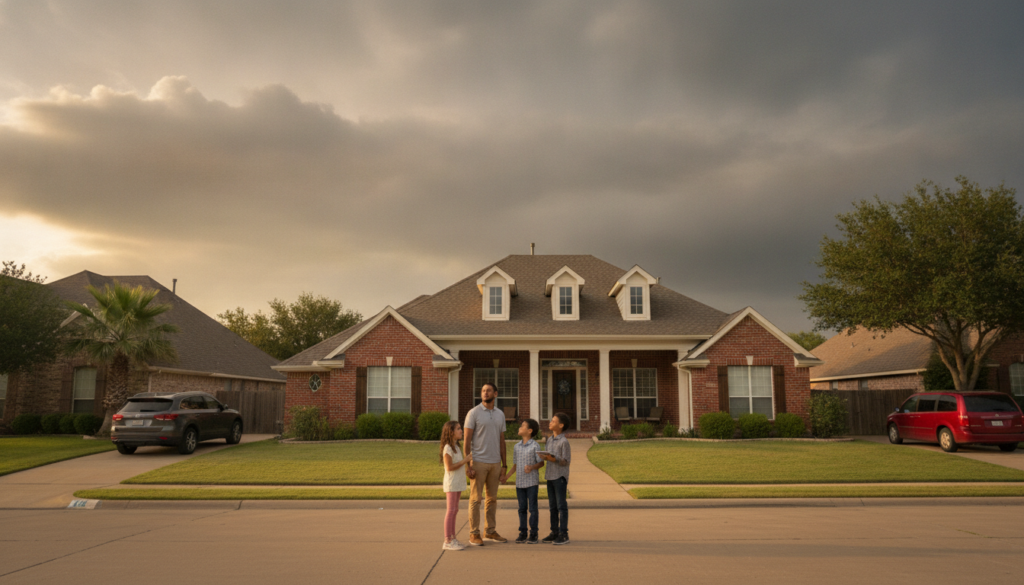
Dallas-Fort Worth sits squarely in an area that gets frequent, severe storms. Hail, high winds, and tornadoes show up every spring and early summer. A single hailstorm can damage thousands of roofs across the metroplex in one afternoon, and insurers have to price for that. That’s the biggest single reason homeowners insurance rates Dallas Fort Worth families pay often run above what someone in a calmer climate would see.
A few broader forces push in the same direction:
- Rising construction and labor costs. Inflation, supply chain problems, and a tight labor market have all made it more expensive to repair or rebuild a home. Since your policy is designed to rebuild your house, those costs flow straight into your premium.
- Reinsurance costs. Insurance companies buy their own insurance, called reinsurance, to protect against catastrophic losses. When reinsurance gets more expensive, some of that cost tends to get passed along.
- Claim frequency. DFW has seen a lot of roof claims, and frequent claims across a region push overall costs up for everyone.
None of this means you’re stuck. It just helps to know the backdrop. When we talk about homeowners insurance rates Dallas Fort Worth carriers offer, we’re talking about a market shaped by real regional risk. Understanding that is the first step to managing your own costs.
How your home’s location and local risks shape your rate
Two nearly identical houses can carry very different premiums simply because of where they sit. Location is one of the heaviest factors in homeowners insurance rates Dallas Fort Worth insurers weigh, and it works on a couple of levels.
Regional and neighborhood weather risk
Because hail and wind are the dominant threats here, insurers look closely at how exposed your specific area is. A home in a part of the metroplex that has taken repeated hail hits over the years may be viewed differently than one with a calmer history. Flood risk matters too. DFW isn’t coastal, but plenty of homes sit near creeks, in low-lying spots, or in mapped flood zones. Standard homeowners policies generally do not cover flooding, so if you’re in a flood-prone area, that’s a separate conversation to have with an agent about your options.
Fire protection and emergency response
How close you are to a fire station and a reliable water supply, like fire hydrants, can influence your rate. The idea is simple. Faster emergency response can mean less damage. Homes in areas with strong fire protection and quick response times may be viewed more favorably than remote properties.
Local crime rates
Theft and vandalism are covered losses, so the crime patterns in your area can play a small role too. Lower-crime neighborhoods can mean fewer expected claims, which factors into how insurers price things.
You can’t move your house to change your ZIP code, but knowing why location matters helps explain why your neighbor across the county line might have a very different quote. It’s one reason comparing homeowners insurance rates Dallas Fort Worth options with a local agent who knows the metroplex can be genuinely useful.
The characteristics of your home that move the needle most
After location, the physical details of your house do a lot of the heavy lifting in your premium. This is where you actually have some influence, both when you buy a home and when you maintain it.
Replacement cost, not market value
This one trips up almost every new homeowner. Your policy isn’t built around what you paid for the house or what it would sell for today. It’s built around replacement cost, the estimated amount it would take to rebuild your home from the ground up using current materials and labor.
That distinction matters a lot in DFW right now. Construction and labor costs have climbed, so replacement costs have climbed too, even for homes whose market value has stayed flat. A bigger or more custom home costs more to rebuild, which means a higher premium. When we help clients understand homeowners insurance rates Dallas Fort Worth companies quote, getting the replacement cost estimate right is one of the most important steps. Underinsuring your home can leave a painful gap after a major loss.
Age and condition of the home
Older homes tend to carry more risk, and often see higher rates, especially if the main systems haven’t been updated. Insurers pay attention to the age and condition of:
- Electrical systems (older wiring can be a fire risk)
- Plumbing (aging pipes can lead to water damage claims)
- HVAC and other major systems
If you’ve updated any of these in an older home, mention it when you get a quote. A home built to modern codes, or one with documented recent upgrades, may be viewed more favorably.
Your roof: a very big deal in North Texas
Nowhere is roof age and material more important than in DFW. Hail and wind are the top claim drivers here, so insurers look hard at how old your roof is and what it’s made of. A newer roof, or one built with more impact-resistant materials, is generally seen as lower risk than an aging roof that’s already weathered several storm seasons.
This is honestly one of the biggest single factors in homeowners insurance rates Dallas Fort Worth homeowners deal with. If your roof is getting up there in age, know that some carriers handle older roofs differently than newer ones, and how they cover roof losses (replacement cost versus actual cash value) can vary. Talk that through with an agent before you’re standing in a hailstorm.
Construction materials
What your home is built from affects how vulnerable it is to certain kinds of damage. Brick and masonry construction, for example, may respond differently to wind and fire than wood-frame construction. Insurers factor that vulnerability into the price.
Protective devices
Here’s a factor that works in your favor. Safety and security features can be viewed positively by insurers because they lower the odds or severity of a claim. Things like:
- Smoke detectors and fire alarms
- Burglar and security systems
- Sprinkler systems
- Water leak detection devices
If you have these, make sure your agent knows. Different carriers recognize different features, and you don’t want to leave a possible credit on the table just because it never came up.
How your coverage choices and deductibles change your premium
So far we’ve talked mostly about the house. Now let’s talk about the part you control most directly: how you build your policy. Your coverage choices are a huge lever in homeowners insurance rates Dallas Fort Worth families end up paying.
Coverage limits
Your policy has several coverage limits working together, and each one affects the price:
- Dwelling coverage protects the structure of your home. This is usually tied to replacement cost.
- Personal property coverage protects your belongings, from furniture to electronics to clothing.
- Liability coverage protects you if someone is injured on your property or you’re found responsible for damage to others.
- Additional living expenses can help if a covered loss forces you out of your home temporarily.
Generally, higher limits mean a higher premium, and lower limits mean a lower premium. The trick is finding limits that genuinely protect you without paying for more than you need. There’s no one-size-fits-all answer, which is exactly why talking through your specific situation with an agent matters.
Deductibles, including the separate wind and hail deductible
Your deductible is the amount you pay out of pocket before your insurance kicks in on a claim. As a general rule, a higher deductible lowers your premium, and a lower deductible raises it. You’re deciding how much risk you want to keep versus how much you want the insurer to take on.
In North Texas, there’s a wrinkle you absolutely need to understand: the separate wind and hail deductible. Hail and wind are such common causes of loss here that many DFW policies carry a distinct deductible for those perils, often expressed as a percentage of your dwelling coverage rather than a flat dollar amount. That percentage-based deductible can be one of the biggest factors in your overall premium.
The wind and hail deductible is the single detail we see homeowners overlook most often. Because it’s tied to a percentage of your dwelling coverage rather than a flat number, it can be much larger than the standard deductible you’d pay on, say, a kitchen fire. Knowing what yours is before a storm, not after, is one of the smartest things a DFW homeowner can do.
When you compare homeowners insurance rates Dallas Fort Worth quotes side by side, always check whether the wind and hail deductibles match. A lower-priced quote might simply have a higher wind and hail deductible baked in, which changes what you’d actually pay after a storm. An apples-to-apples comparison is the only fair one.
Your personal insurance profile and homeowners insurance rates Dallas Fort Worth carriers consider
Beyond the house itself, insurers look at you as a policyholder. This surprises some people, but it’s a normal and legal part of how homeowners insurance rates Dallas Fort Worth companies assess risk.
Claims history
Your past claims tell an insurer something about future risk. Frequent claims, whether from you personally or tied to your property’s address, can lead to higher premiums. Many insurers pull what’s called a CLUE report (Comprehensive Loss Underwriting Exchange), which tracks claims history for up to about seven years and can follow both a person and a property.
This is one reason we often talk with clients about being thoughtful with small claims. Filing a claim for a minor loss that’s barely above your deductible can sometimes cost more in the long run than it saves. That’s not a rule, just something worth discussing before you file. Your agent can help you think it through case by case.
Credit-based insurance score
Many Texas insurers use a credit-based insurance score as one factor in setting rates. This isn’t the same as your regular credit score, but it draws on similar information. Generally, a stronger credit profile can be associated with lower premiums. If you’ve been working on your credit, that effort can quietly help on the insurance side too.
Continuous coverage
Keeping insurance without significant gaps can reflect positively when it comes time to price a policy. Long lapses in coverage can signal higher risk to some carriers. If you’re moving between homes or switching carriers, coordinate the timing so you don’t create an unnecessary gap.
The market forces behind rising homeowners insurance rates Dallas Fort Worth families are feeling
We touched on this at the top, but it’s worth going deeper, because so many homeowners tell us their rate went up even though nothing about their house changed. Usually that’s the broader market at work, and understanding it takes some of the sting out.
More frequent and severe storms
Texas simply gets a high volume of significant weather. When storms are frequent and severe, claims pile up across the whole state. Insurers spread the cost of those claims across all policyholders, which is how insurance is designed to work. More claims regionwide tends to mean upward pressure on everyone’s rates over time.
Higher rebuilding costs
Remember, your policy is built to rebuild your home. When lumber, roofing materials, and skilled labor all cost more, the price of rebuilding rises, and premiums reflect that. This is a big part of why homeowners insurance rates Dallas Fort Worth homeowners see have climbed even in years without a major storm hitting their specific property.
Reinsurance and the cost of protecting the insurer
Insurance companies protect themselves from catastrophic losses by buying reinsurance. When global reinsurance markets get more expensive, often after years of heavy catastrophe losses, those higher costs work their way down to consumers. It’s a behind-the-scenes factor most homeowners never see, but it’s real.
Frequent roof claims
DFW has developed a reputation for a high volume of roof claims. Some of that comes from genuine hail damage, and some has been driven by aggressive storm-chasing contractors pushing claims after every storm. Whatever the cause, a high frequency of roof claims across the region contributes to rising premiums for everyone. It’s a reminder that responsible claim decisions and good roof maintenance benefit the whole community over time.
Practical steps to manage your homeowners insurance rates Dallas Fort Worth options
Understanding the factors is great, but what can you actually do with that knowledge? Quite a bit. None of these are magic buttons, and we can’t promise any specific outcome, but they’re worth reviewing with an agent.
- Keep your roof in good shape and know its age. The roof matters so much in North Texas that staying on top of maintenance and documenting the roof’s age and material can help you understand your options.
- Review your deductibles, including wind and hail. Understanding how a higher or lower deductible affects your premium, and knowing exactly what your wind and hail deductible is, lets you make an informed choice about how much risk to keep.
- Mention every safety feature you have. Alarms, security systems, water leak detectors, and similar devices may be recognized by your carrier. Don’t assume they know. Tell them.
- Bundle where it makes sense. Many people carry auto, home, and other policies together. Combining policies with one carrier can sometimes be recognized favorably. It’s worth asking about.
- Be thoughtful about small claims. Because claims history follows you, it can pay to talk through whether a small claim is worth filing before you do it.
- Keep your coverage continuous. Avoid unnecessary gaps when you switch homes or carriers.
- Get your replacement cost right. Underinsuring to save money can backfire badly after a loss. The goal is accurate coverage, not the lowest possible number.
- Review your policy at least once a year. Home values, rebuilding costs, and your own life change. A yearly review helps make sure your coverage still fits.
Here’s the honest truth. Homeowners insurance rates Dallas Fort Worth carriers offer depend on so many interacting factors that comparing quotes on your own can get confusing fast. Two quotes with the same headline price might have completely different deductibles, coverage limits, and roof coverage terms underneath. That’s where a local agent earns their keep, by helping you compare the details that actually matter.
Putting it all together
Let’s zoom back out. Your homeowners insurance premium in DFW is really a story about risk, told in several chapters:
- Where your home is and how exposed it is to hail, wind, flooding, fire response, and crime.
- What your home is, its replacement cost, age, condition, roof, construction, and safety features.
- How you build your policy, your coverage limits and deductibles, especially that separate wind and hail deductible.
- Who you are as a policyholder, your claims history, credit-based insurance score, and continuous coverage.
- The wider market, storm frequency, rebuilding costs, reinsurance, and regional claim trends.
Some of those factors you can influence. Some you can’t. But understanding all of them puts you in a far stronger position than most homeowners who just see a number and hope for the best. You’ll know which questions to ask, what details to double-check, and where you might have room to make choices that fit your budget and your peace of mind.
Every home and every family in the metroplex is a little different, so there’s no single “right” answer to what your coverage should look like. The best move is to sit down with someone local who understands DFW weather, DFW rebuilding costs, and the way homeowners insurance rates Dallas Fort Worth carriers actually work here. If you’d like to walk through your own situation and talk through your options with no pressure, we’d be glad to help you make sense of it all at DRH Insurance Group. Reach out whenever you’re ready, and we’ll take it one plain-English step at a time.
Frequently asked questions
Why are homeowners insurance rates in Dallas-Fort Worth so high?
DFW sits in an area that gets frequent hail, wind, and tornado activity, and severe storms drive a large number of claims across the region. Rising construction and labor costs, higher reinsurance costs, and a high volume of roof claims all add upward pressure. Together, these factors tend to push North Texas premiums above the national average.
What is a wind and hail deductible in Texas home insurance?
In North Texas, many homeowners policies carry a separate deductible that applies specifically to wind and hail damage, often expressed as a percentage of your dwelling coverage rather than a flat dollar amount. That means the amount you pay out of pocket after a hailstorm can be different, and often larger, than your standard deductible. Know exactly what your wind and hail deductible is before a storm hits.
Does my roof affect my homeowners insurance rate in DFW?
Yes. The age and material of your roof are among the biggest factors in North Texas because hail and wind are the top causes of claims here. A newer roof, or one built with more impact-resistant materials, is generally viewed as lower risk than an aging roof. How a carrier covers roof losses can also vary, so it’s worth discussing with an agent.
Do insurance companies use my credit score for home insurance in Texas?
Many Texas insurers use a credit-based insurance score as one factor in setting rates. It draws on credit information but isn’t identical to your regular credit score. Generally, a stronger credit profile can be associated with lower premiums. It’s one of several factors an insurer weighs, not the only one.
Will filing a small home insurance claim raise my rate?
Claims history follows both you and your property, often tracked for up to about seven years through a CLUE report, and frequent claims can lead to higher premiums. For a minor loss barely above your deductible, filing a claim can sometimes cost more over time than it saves. It’s a good idea to talk it through with your agent before deciding.
How can I lower my homeowners insurance rate in Dallas-Fort Worth?
You can review your deductibles, keep your roof well maintained, make sure your carrier knows about safety features like alarms and leak detectors, and ask about bundling your policies. Maintaining continuous coverage and being thoughtful about small claims can help as well. A local agent can help you compare options in detail, though no specific savings can be guaranteed.