Your landlord’s insurance covers the building, not your stuff inside it. That trips up a lot of renters, whether you’re in an Uptown apartment, a Fort Worth duplex, or a house in Arlington. If a kitchen fire, a burst pipe, or a break-in wiped out your furniture, clothes, and electronics tomorrow, replacing all of it would come out of your own pocket. Renters insurance exists to close that gap, and it tends to be one of the more affordable types of coverage a household can carry.
At DRH Insurance Group, we talk with DFW renters every week who figured their landlord had them covered, or who assumed renters insurance was more complicated than it is. Here’s the reality: once you understand the pieces, the process is pretty simple. This guide walks you through exactly how to get renters insurance in Dallas-Fort Worth step by step. We’ll cover what a policy protects, what to gather for a quote, how to compare your options, and how to keep your coverage current as life changes.
We’re here to educate, not to sell you a specific product. The point is to help you understand your choices well enough to have a useful conversation with an agent and land on a decision you feel good about.
Step 1: Understand What Renters Insurance Actually Covers
Before you compare quotes, it helps to know what a renters policy usually includes. Most of them are built around three types of protection. When people ask us how to get renters insurance in Dallas-Fort Worth, this is where we always start, because everything else flows from understanding the coverage.
Personal property coverage
This is the part most renters think of first. Personal property coverage helps protect your belongings against covered events like fire, theft, vandalism, and certain other perils. Your furniture, electronics, clothing, kitchen gear, and the rest. If a fire in a neighboring unit spreads to yours, or someone breaks in and walks off with your laptop and TV, this is the coverage meant to help you replace those items.
One detail worth knowing early: policies can pay claims on an actual cash value basis or a replacement cost basis. Actual cash value factors in depreciation, so a five-year-old television is valued as a five-year-old television. Replacement cost coverage is designed to help you buy a new equivalent at today’s prices. Which one you want is a choice to talk through with an agent, based on how much protection you’re after and what fits your budget.
Liability coverage
Liability coverage protects you financially if you’re found responsible for injuring someone or damaging their property. Here’s a common one: a friend visits your apartment, trips over a rug, and breaks a wrist. If you’re held responsible, liability coverage can help with the related medical and legal costs up to your policy limits. This protection often follows you outside your apartment too, which is why it matters even if you don’t own much.
Additional living expenses (loss of use)
If a covered event makes your rental temporarily unlivable, say a fire forces you out during repairs, additional living expenses coverage, sometimes called loss of use, helps pay the extra costs of living somewhere else. That can cover a hotel or short-term rental, meals above your normal grocery bill, and other added expenses. Hotel costs climb fast across the Metroplex, so this coverage can be a real relief during a rough stretch.
A quick reminder: every policy has its own limits, deductibles, and exclusions. Flood damage, for example, is generally not covered by a standard renters policy. If flooding is a worry where you live, that’s a separate conversation to have with an agent.
Step 2: Take a Home Inventory Before You Get a Quote
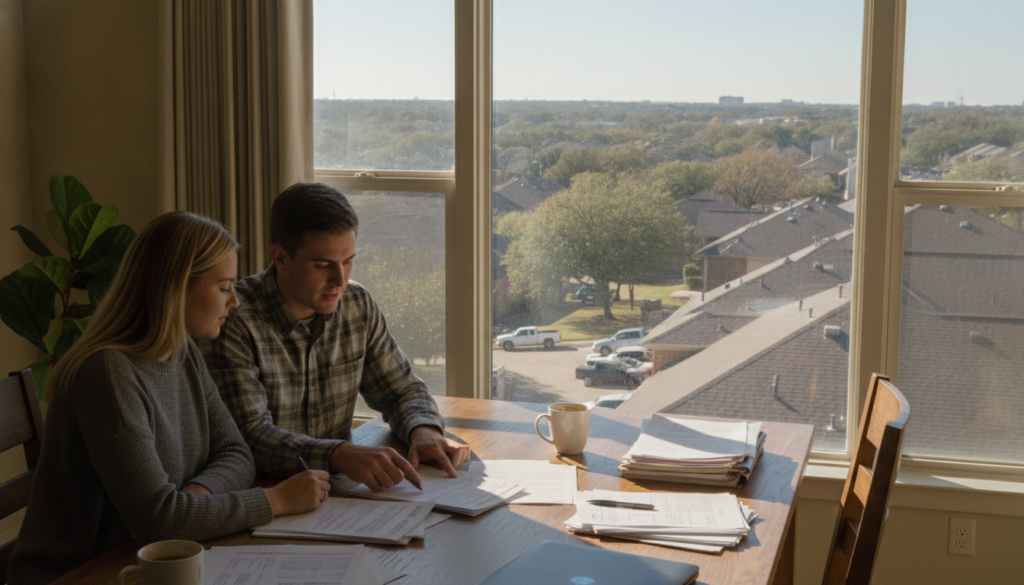
This is the step most people skip, and it’s one of the most useful. Before you decide how much personal property coverage you want, you need a realistic picture of what you own and what it would cost to replace. That’s what a home inventory gives you.
Most renters badly underestimate the value of their belongings. Walk through your place and add it up. The couch. The mattress and bed frame. The dining set. Every TV, laptop, tablet, and phone. Kitchen appliances and cookware. Your whole wardrobe and shoes. Tools, sporting gear, and the small stuff that quietly piles up, like chargers, cables, and decor. Tally it honestly and most households own far more than they guessed.
How to build a simple inventory
- Go room by room. Start in one room and work through the whole place so you don’t miss closets, drawers, or storage areas.
- Photograph or video everything. A quick phone video where you narrate what you see is fast and thorough. Open closets and cabinets as you go.
- Note high-value items separately. Jewelry, watches, cameras, musical instruments, and collectibles may have special coverage limits under a standard policy. If you own things like these, ask an agent how they’re handled and whether extra coverage options make sense.
- Keep receipts and serial numbers when you can. For electronics and appliances especially, this makes a claim easier to file if you ever need to.
- Store it somewhere safe. Save your inventory and photos in the cloud or email them to yourself, so they survive even if your devices don’t.
Once you have this list, you’ll have a defensible estimate of your personal property value. That number becomes the basis for the coverage limit you pick, and it’s a piece of information any agent will ask for. Doing this work upfront is honestly half the battle in figuring out how to get renters insurance in Dallas-Fort Worth that actually fits your life.
Step 3: Gather the Information You Need for an Accurate Quote
With your inventory done, you’re ready to pull together the rest of the details a quote requires. Having this ready before you reach out speeds the whole thing up and helps you get accurate numbers back instead of rough guesses. When renters ask us how to get renters insurance in Dallas-Fort Worth without a lot of back-and-forth, this prep is the answer.
The details to have handy
- Your full name and the rental address. The specific DFW address matters, because location details feed into the quote.
- Information about the dwelling. Is it an apartment, a duplex, a condo, or a single-family house? Roughly what year was it built? These details help describe the risk.
- Your estimated personal property value. This comes straight from the home inventory you built in Step 2.
- Desired coverage limits. How much personal property and liability coverage you want to carry. These are choices you can talk through with an agent.
- Your preferred deductible. This is what you’d pay out of pocket before coverage kicks in on a claim. A higher deductible generally means a lower premium, and a lower deductible generally means a higher one.
- Security and safety features. Smoke detectors, fire extinguishers, deadbolts, and alarm systems can matter, both for your safety and because some features may qualify you for discounts.
Not sure what coverage limits or deductible make sense? That’s completely normal. You don’t have to show up with all the answers. Accurate information about what you own and how you live is enough for an agent to help you work through the options.
Step 4: Compare Your Options and Understand What Affects the Cost
Once you know what you want to protect, the next part of how to get renters insurance in Dallas-Fort Worth is comparing your options and understanding what drives the cost. We always encourage renters to look at more than one option and ask questions, including with a local agency like DRH Insurance Group. A quote isn’t just a number. It reflects the coverage limits, deductibles, and features behind it, so comparing apples to apples matters.
What typically influences renters insurance costs
- Location. Location tends to weigh less on renters insurance than on homeowners coverage, but factors like the crime rate in your DFW neighborhood can still affect what you pay. A policy in one part of the Metroplex may look different from one a few miles away.
- Coverage limits and deductibles. Higher limits and a lower deductible generally push the premium up, while lower limits and a higher deductible generally bring it down. This is the main lever you control, and it comes back to your home inventory.
- Credit-based insurance score. In Texas, insurers are permitted to use a credit-based insurance score as one factor in setting rates. It’s one input among several, not the whole picture.
- Claims history. Prior claims can affect your rates, since insurers look at past patterns when they price a policy.
- Safety and security features. As mentioned above, things like smoke detectors, fire extinguishers, and alarm systems may qualify you for discounts. It’s worth mentioning everything your place has.
- Bundling. Plenty of renters carry auto insurance too. Bundling renters and auto with the same provider can often lead to discounts, which is why it comes up in nearly every conversation we have about how to get renters insurance in Dallas-Fort Worth.
Comparing the right way
When you compare quotes, resist the urge to chase the lowest number. Line up the details behind each option instead:
- Are the personal property limits the same across the quotes?
- Are the liability limits comparable?
- Is the deductible the same, or is one quote lower simply because the deductible is higher?
- Does the policy pay on a replacement cost or actual cash value basis?
- Are there sub-limits on categories like jewelry or electronics that matter for what you own?
Compare on those terms and you can see which option genuinely gives you the protection you want. This is also where talking with an agent helps, because we can explain why two quotes that look alike on the surface might be quite different underneath.
Step 5: Purchase Your Policy and Read It Carefully
After you’ve compared your options and picked the coverage that fits your needs and budget, the next step in how to get renters insurance in Dallas-Fort Worth is buying the policy. This part is usually simple. Depending on the provider, you can often finish online or with the help of an agent, and coverage can typically start quickly once everything is in place.
What to do before you sign
Take a few minutes to actually read your policy documents. We know that sounds tedious. A few minutes here can save you real headaches later. As you read, look for:
- Your coverage limits. Confirm the personal property and liability amounts match what you discussed.
- Your deductible. Make sure it’s the number you expected.
- How claims are paid. Replacement cost versus actual cash value, as we covered earlier.
- Exclusions. Note what isn’t covered. Flood is a common one on standard renters policies. Understanding exclusions upfront prevents surprises.
- Special limits. Categories like jewelry, firearms, cash, and electronics sometimes carry their own caps.
If anything in the documents is confusing, ask. There’s no such thing as a silly question when you’re trying to understand your own protection. An agent should be glad to walk through the language with you in plain terms.
A note on landlord requirements
Plenty of DFW apartment communities and property managers require tenants to carry renters insurance as a condition of the lease, and they may ask you to list them as an interested party on the policy. If your lease has this requirement, mention it when you set up your policy so the paperwork gets handled correctly. This is a common request and easy to accommodate.
Step 6: Review and Update Your Coverage Over Time
Getting a policy in place isn’t the finish line. Life changes, and your coverage should keep up. We suggest reviewing your renters insurance about once a year, or any time something meaningful shifts. Making this a habit is the last piece of how to get renters insurance in Dallas-Fort Worth that keeps serving you well for years, not just on day one.
When a review makes sense
- You bought big-ticket items. A new TV, laptop, gaming setup, or engagement ring can change how much personal property coverage you need.
- You moved. A new address, even across town in the Metroplex, means it’s time to update your policy.
- Your household changed. A roommate moved in or out, or you moved in with a partner. Coverage for multiple people has its own wrinkles worth discussing.
- You added an auto policy. If you didn’t bundle before but now have a vehicle insured, it may be worth revisiting whether combining policies makes sense.
- It has simply been a year. An annual check-in is a good baseline even when nothing dramatic has changed, because both prices and your belongings drift over time.
Keeping your home inventory current is the easiest way to make these reviews painless. Add new purchases as you go, and updating your coverage limits becomes a quick conversation rather than a from-scratch project.
Common Questions DFW Renters Ask Us
A handful of themes come up over and over when we help people figure out how to get renters insurance in Dallas-Fort Worth. Here are a few worth answering directly.
Is renters insurance really worth it if I don’t own much?
Two things tend to change people’s minds here. First, most renters own more than they think once they actually inventory it. Second, personal property is only part of the value. The liability protection and additional living expenses coverage can matter just as much, and those help you regardless of how much furniture you own.
Does my roommate’s policy cover my belongings?
Generally, no. A policy typically covers the named policyholder and their property. If you share a place with roommates, each person usually needs their own coverage, or you need to be specifically named and understand how the shared policy works. This is a good thing to clarify with an agent so there are no gaps.
What if I work from home or run a small business from my rental?
This is increasingly common across DFW. A standard renters policy may limit business property and may not address business liability at all. If you run a business from your rental, even a small one, it’s worth discussing whether extra coverage makes sense. Our team handles small business insurance too, so we can look at the whole picture together.
Consider a hypothetical
Here’s a composite example based on the kinds of situations we see, not a specific real customer. Picture a couple renting an apartment in North Dallas. They figured they owned very little of value until they built a home inventory and realized their furniture, two laptops, a TV, kitchen gear, and clothing added up to far more than expected. When a pipe burst in the unit above and damaged their belongings, having personal property coverage in place, along with additional living expenses coverage while the unit was repaired, made a genuinely stressful event much more manageable. Situations like this are exactly why we push renters to think through coverage before they need it, not after.
Putting It All Together
Here’s the whole path in one place. Figuring out how to get renters insurance in Dallas-Fort Worth comes down to six steps: understand what a policy covers, build a home inventory, gather your quote information, compare your options and the factors behind them, buy and carefully read your policy, and review your coverage over time. None of these is complicated on its own. Put together, they help you build protection that fits your belongings, your liability exposure, and your budget.
The biggest mistake we see isn’t overpaying or picking the wrong deductible. It’s going without coverage at all, assuming a landlord’s policy has you covered when it doesn’t. Renters insurance is one of the more affordable ways to protect yourself against events that would otherwise be a serious financial setback, and setting it up is far simpler than most people expect.
If you have questions about any of these steps, or you’d just like a real person to walk through the options with you, our team at DRH Insurance Group is here and local to the DFW area. We’re glad to help you think through coverage limits, deductibles, bundling with auto, and anything else on your mind, at whatever pace feels comfortable. When you’re ready to talk it through, reach out to a local agent and we’ll help you find the coverage that fits your situation.
Frequently asked questions
Do I need renters insurance if my landlord already has insurance in DFW?
Your landlord’s insurance covers the building itself, not your personal belongings or your liability inside the unit. If your things were damaged or stolen, or someone was injured in your rental, that would fall on you without your own policy. Many DFW apartment communities also require renters insurance as part of the lease.
What information do I need to get a renters insurance quote in Dallas-Fort Worth?
You’ll want your name and rental address, details about the dwelling like type and year built, an estimate of your personal property value from a home inventory, your desired coverage limits and deductible, and any safety features your home has. Having this ready makes the quote faster and more accurate. If you’re unsure about limits or deductibles, an agent can help you decide.
Does renters insurance in Texas cover flood damage?
A standard renters policy generally does not cover flood damage, which is a separate type of coverage. If flooding is a concern in your DFW neighborhood, it’s worth discussing separate flood coverage options with an agent. Always check your policy’s exclusions so you understand exactly what is and isn’t included.
Can I bundle renters and auto insurance in Dallas-Fort Worth?
Yes. Many renters carry both renters and auto insurance, and bundling them with the same provider can often lead to discounts. It also simplifies managing your policies in one place. A local agent can look at your situation and explain how bundling might work for you.
Does my roommate’s renters policy cover my belongings?
Generally no. A renters policy typically covers only the named policyholder and their property. If you share a rental, each person usually needs their own coverage or must be specifically named on a shared policy. It’s best to clarify this with an agent so there are no gaps in protection.
How often should I review my renters insurance in DFW?
Reviewing your policy about once a year is a good baseline, and any time your situation changes. Buying valuable items, moving to a new address, adding a roommate, or getting an auto policy are all good reasons to revisit your coverage. Keeping your home inventory current makes these reviews quick and easy.