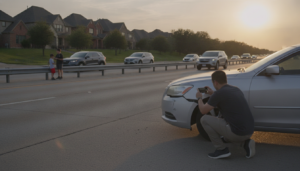
Driving around the Dallas-Fort Worth metroplex means dealing with a lot. Packed interstates like I-635 and I-35. Long hauls between suburbs. Hailstorms every spring. And plenty of other drivers sharing the road with you. With that much going on, it is easy to set up an auto policy once, file it away, and never think about it again until something goes wrong.
At DRH Insurance, we talk with DFW families and drivers every week who are surprised by what their policy does and does not do. The good news is that most of the trouble comes down to a handful of avoidable missteps. In this guide, we walk through the most common auto insurance mistakes DFW drivers make, explain why they matter, and give you practical questions to bring to the table when you review your coverage. This is educational information, not advice to buy a specific policy, but it should help you feel a lot more confident about your options.
Why understanding the common auto insurance mistakes DFW drivers make matters
Auto insurance is one of those things almost everyone has and very few people fully understand. You pay the bill, you keep the card in your glove box, and you hope you never need it. But the whole point of a policy is what happens on the worst day, and that is exactly when a hidden gap shows up.
We focus on the common auto insurance mistakes DFW drivers make for a simple reason: the metroplex has its own set of realities. Texas has a meaningful number of uninsured and underinsured drivers on the road. We have heavy traffic, high vehicle values, weather events, and long distances that add up to real exposure. A policy that looks fine on paper can leave a family paying out of pocket for medical bills, car repairs, or someone else’s damages after a serious accident.
Knowing about these mistakes ahead of time puts you in the driver’s seat. Instead of finding out about a coverage gap in the middle of a claim, you get to ask the right questions now, while everything is calm and you still have choices. Let’s get into it.
Mistake #1: Assuming state-minimum liability is enough
One of the biggest mistakes we see is buying only the minimum liability coverage that Texas law requires. In Texas, the minimum liability limits are commonly written as 30/60/25. That means:
- $30,000 for bodily injury per person
- $60,000 for bodily injury per accident (total)
- $25,000 for property damage per accident
Those numbers satisfy the law. They let you register your car and stay legal. The problem is that they were never built to cover a serious, real-world crash. Think about what a single trip to a DFW emergency room and a few days in the hospital can cost. Add an ambulance ride, imaging, surgery, and follow-up care, and $30,000 per person can disappear in an afternoon.
Now think about property damage. That $25,000 property damage limit is meant to cover the other party’s vehicle if you are at fault. Late-model trucks and SUVs are everywhere on DFW roads, and many cost well past that limit. If you cause an accident that totals a newer vehicle, the difference between your limit and the actual damage can become your personal responsibility.
Why this trips up so many drivers
Nobody buys state-minimum coverage because they want to be underinsured. Usually it happens because a driver is shopping on price alone and picks the cheapest option without understanding what those limits really mean. State minimums keep the monthly cost lower, so they look attractive at a glance.
The catch is that liability coverage pays for damage and injuries you cause to other people. If your limits run out, the injured party can come after you for the rest. That is a heavy risk to carry to save a little each month. When we review policies with DFW drivers, one of the first conversations is usually about whether their liability limits actually match the way they live and drive. Higher limits are an option worth understanding, and the right level is a personal decision to talk through with an agent based on your assets and your comfort with risk.
Mistake #2: Thinking liability covers your own car
Here is a misunderstanding we hear constantly, and it belongs near the top of any list of the common auto insurance mistakes DFW drivers make. A lot of people believe that because they have auto insurance, everything is covered. In reality, liability-only coverage does not pay a dime toward your own vehicle or your own injuries when you are at fault.
To protect your own car, you generally need two additional coverages:
- Collision coverage helps pay to repair or replace your vehicle after a collision, whether you hit another car, a guardrail, or a curb.
- Comprehensive coverage helps with damage that is not a collision, such as hail, theft, vandalism, fire, flooding, or hitting an animal.
In DFW, comprehensive coverage deserves special attention because of our weather. Spring hailstorms are practically a local tradition, and one storm can dent hoods, crack windshields, and total whole rooftops of cars across a neighborhood. Drivers who carry liability only are often stunned to learn that hail damage to their own vehicle is not covered.
The “full coverage” myth
People love to say they have “full coverage,” but that phrase has no fixed legal meaning. It usually refers to carrying liability plus collision and comprehensive. Even then, “full” does not mean unlimited. Every policy has limits, deductibles, and exclusions. Assuming “full coverage” means “everything is handled no matter what” is one of the quieter mistakes on this list, because it leads to unpleasant surprises at claim time. The fix is to actually read what your declarations page lists and ask your agent to walk you through each line.
Mistake #3: Skipping uninsured/underinsured motorist coverage
If there is one coverage type that deserves a spotlight in any discussion of the common auto insurance mistakes DFW drivers make, it is uninsured/underinsured motorist coverage, often written as UM/UIM.
Here is the situation. Texas has a significant population of drivers who carry no insurance at all, plus many more who carry only those state-minimum limits we talked about earlier. So imagine you are stopped at a light in Arlington and someone rear-ends you. It is clearly their fault. But what happens if that driver has no insurance? Or only carries the minimum, which is not enough to cover your injuries and your vehicle damage?
Without UM/UIM coverage, you could be left covering your own costs even though you did nothing wrong. That is a frustrating spot to be in, and it is far more common than people expect given how many underinsured drivers share our roads.
What UM/UIM can help with
UM/UIM coverage is built to step in when the at-fault driver cannot pay for the harm they caused. Depending on how the coverage is structured, it may help with your medical expenses, lost wages, and vehicle damage from an uninsured or underinsured driver. Because Texas minimum liability limits are relatively low and uninsured drivers are common, this is a coverage many DFW drivers choose to discuss carefully. Whether it fits your situation is a personal decision, and it is exactly the kind of thing worth raising with your agent.
Mistake #4: Overlooking PIP and medical payments coverage
Another item on the list is not understanding the coverages that help with medical costs after a crash, no matter who is at fault. Two of these are personal injury protection (PIP) and medical payments coverage.
These coverages can help with medical bills, and in the case of PIP, potentially lost income and certain other expenses, for you and your passengers after an accident. The appealing part is that they often apply regardless of who caused the crash. If you are in a fender-bender and someone in your car needs to see a doctor, this type of coverage can help right away rather than waiting for fault to be sorted out.
Plenty of drivers do not realize these options exist, or they decline them without understanding what they do. We are not telling you that you need them, because that depends entirely on your situation, your health insurance, and your budget. But knowing they exist is the first step to making an informed choice with your agent.
Mistake #5: Setting your deductible without a plan
Your deductible is the amount you agree to pay out of pocket before your coverage kicks in on a covered claim. Choosing one carelessly is one of the more overlooked mistakes, and it can go wrong in both directions.
- Setting it too high can lower your monthly cost, but it means a bigger bill for you at the exact moment you are already dealing with a wrecked car. If you pick a high deductible and could not comfortably cover it in an emergency, you may find yourself unable to actually use your coverage.
- Setting it too low generally raises your monthly cost. It can also make filing small claims less worthwhile, since a claim for a minor repair might not be much more than what you would pay yourself, and claims history can affect your policy going forward.
The smart move is to pick a deductible that matches what you could realistically pay tomorrow if a hailstorm or accident happened tonight. For a lot of DFW households, that means being honest about their emergency savings. There is no universally “right” deductible. There is only the one that fits your budget and your tolerance for out-of-pocket surprises. This is a great topic to work through with an agent who can show you how different deductibles change the shape of your policy.
Mistake #6: Not updating the policy after life changes
Life in DFW moves fast. People get married, buy homes, welcome new drivers, add vehicles, and send kids off to college. A policy that fit perfectly two years ago can quietly fall out of step with your life, and failing to keep it current is one of the most consequential common auto insurance mistakes DFW drivers make.
Adding a new driver
The classic example is a teenager who starts driving. If your teen gets a license and begins driving the family car but is never added to the policy, you could run into trouble at claim time. Insurers expect the drivers in your household to be listed. Leaving a regular driver off the policy is not a shortcut to savings. It can lead to headaches, and in some cases, denied claims or problems keeping your policy in force.
Adding or changing vehicles
Bought a new truck? Traded in the old sedan? Those changes need to make it onto your policy. A new vehicle typically has a grace period, but relying on assumptions instead of confirming your coverage is risky. When you add a vehicle, it is also the perfect moment to reconsider whether you want collision and comprehensive on it, especially if it is newer and worth more.
Moving where the car is parked
Where your vehicle is primarily parked overnight, its garaging location, affects your policy. If you move from one DFW suburb to another, or across town, that matters. Here is a situation that catches families off guard: an adult child takes the family car to college or moves out of state with it. If the vehicle is now regularly garaged somewhere else, the insurer needs to know. Not reporting a change in where the car actually lives is subtle but real, and it can create coverage complications.
Mistake #7: Leaving discounts on the table
Insurance companies offer a range of discounts, and one of the common auto insurance mistakes DFW drivers make is simply never asking about them. We cannot quote specific savings amounts here, and honestly the exact figures vary from driver to driver, but the categories are worth knowing so you can ask the right questions.
Common discount categories that may be available include:
- Bundling your auto policy with home, condo, or renters insurance
- Safe driving records and programs that track driving habits
- Multiple vehicles on the same policy
- Good student discounts for younger drivers who keep their grades up
- Anti-theft and safety features on the vehicle
- Paperless billing or paying in full, depending on the program
Discounts get missed because policies do not automatically apply every one you might qualify for. Your situation changes. A teen becomes a good student. You buy a home and now could bundle. Unless someone reviews it, the opportunity sits there unused. A quick annual review with your agent is the easiest way to make sure you are being considered for everything you are eligible for. We genuinely enjoy this part of the job, because helping DFW families avoid this mistake feels like finding money they did not know they had.
Mistake #8: Only shopping on price
It is natural to care about cost. Everyone does. But treating price as the only factor is one of the sneakier common auto insurance mistakes DFW drivers make, because the cheapest policy is not automatically the best value.
A rock-bottom price often means bare-minimum limits, high deductibles, or missing coverages like UM/UIM and comprehensive. If that low price leaves you exposed to a huge out-of-pocket bill after an accident or hailstorm, the savings were an illusion. The real question is not “what is the cheapest option?” It is “what am I actually getting for what I pay, and does it protect the things I care about?”
We encourage DFW drivers to compare policies on an apples-to-apples basis: same limits, same deductibles, same coverages. Once you do that, you can make a real comparison and a genuine decision, rather than being pulled in by a number that hides gaps. A local agent can help you line those pieces up so you understand the trade-offs instead of guessing.
Mistake #9: Giving inaccurate information on the application
This one surprises people, but it matters. Providing false or even unintentionally inaccurate information on your insurance application is among the common auto insurance mistakes DFW drivers make, and it can carry real consequences.
Sometimes it is deliberate, like listing a lower-risk garaging address to try to lower the cost, or leaving a household driver off the policy. Sometimes it is completely innocent, like forgetting to mention a fender-bender or misremembering your annual mileage. Either way, inaccurate information can lead to premium adjustments, complications with a claim, or even cancellation of the policy.
The lesson is simple: be honest and be thorough. Report all the drivers in your household, be accurate about how the vehicle is used, and give your real garaging location. Accuracy protects you, because a policy built on correct information is far more likely to respond the way you expect when you actually need it. If you are ever unsure about what to disclose, just ask. That is what your agent is there for.
Mistake #10: Never reviewing the policy again
Maybe the most common of the common auto insurance mistakes DFW drivers make is the set-it-and-forget-it approach. A policy is not a slow cooker. Your life changes, your vehicles change, their values change, and the discounts you qualify for change. A policy that has not been looked at in five years is almost certainly out of sync with your reality in at least one way.
We suggest reviewing your auto policy at least once a year, and any time a major life event happens. A good annual review looks at:
- Whether your liability limits still make sense for your situation
- Whether you want UM/UIM, PIP, or medical payments coverage
- Whether collision and comprehensive still fit each vehicle’s value
- Whether your deductible still matches your savings and comfort level
- Who is driving your vehicles and whether they are all listed
- Where each vehicle is actually parked overnight
- Any discounts you might now qualify for
Regular reviews turn insurance from a mystery bill into a tool you actually understand. It is the single best habit for avoiding almost every mistake on this list.
A quick composite example
To make this concrete, here is a hypothetical situation that reflects a composite of the kinds of conversations we have with DFW families. Picture a couple in a growing suburb who bought a policy years ago with state-minimum limits, liability only, no UM/UIM, and a high deductible they picked to keep the cost down. Since then, they bought a newer SUV, their teenager started driving, and they moved to a bigger house across town. None of it made it onto the policy.
Everything is fine until a spring hailstorm hammers the neighborhood and dents both vehicles. Because they carry liability only, hail damage to their own cars is not covered. On top of that, their teen has been driving unlisted, and their garaging address is outdated. What felt like a lean, affordable policy suddenly reveals several gaps at once, all of them preventable with a simple review.
This example is not a real client. It is a blend of common patterns we see, and it shows how these mistakes tend to cluster together. The encouraging part is that every one of those issues could have been caught and discussed in a fifteen-minute policy review.
How to start fixing the common auto insurance mistakes DFW drivers make
If you read this far and thought “I am not totally sure what my policy covers,” you are in good company, and you are already ahead of most people. Here is a simple starting checklist:
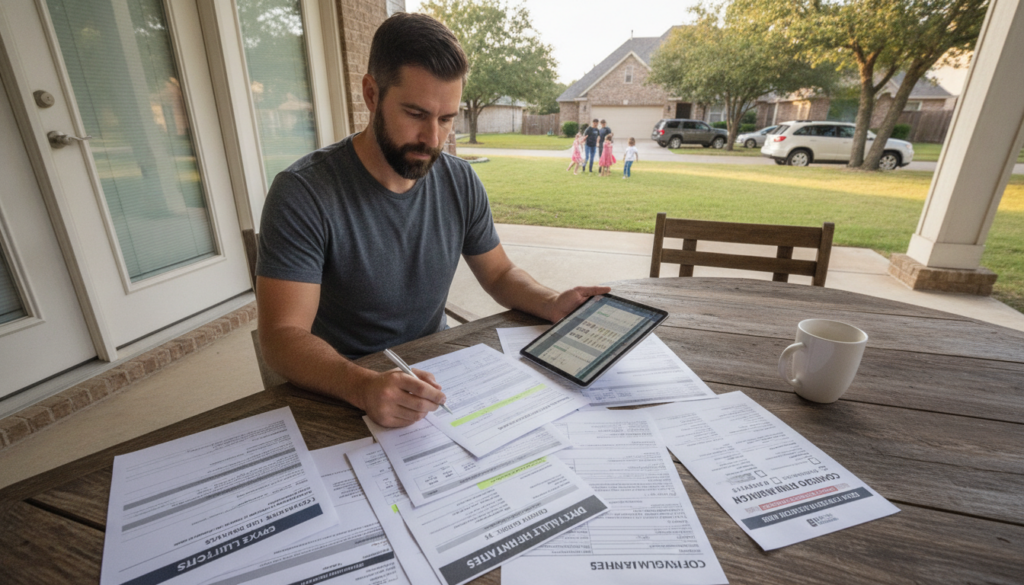
- Pull out your declarations page, the summary that lists your coverages, limits, and deductibles.
- Look at your liability limits and ask whether they match your assets and lifestyle.
- Check whether you have collision and comprehensive, especially given DFW hail.
- See if UM/UIM, PIP, or medical payments coverage are on there.
- Confirm every household driver and vehicle is listed correctly.
- Verify your garaging address is current.
- Note any life changes since the policy was written.
With that information in hand, a conversation with an agent becomes productive instead of overwhelming. You are not starting from zero. You are asking specific, informed questions about your real situation.
At DRH Insurance, our team helps DFW families, drivers, and small business owners understand their options in plain English, without pressure and without jargon. The choices about limits, deductibles, and coverages are always yours to make. Our job is to make sure you understand them well enough to decide with confidence. If any of the common auto insurance mistakes DFW drivers make sound a little too familiar, we would be glad to sit down, review your current policy, and talk through the options that fit your life. Reach out whenever you are ready, and let’s make sure your coverage is working the way you think it is.
Frequently asked questions
What is the minimum auto insurance required in Texas?
Texas requires minimum liability limits commonly written as 30/60/25: $30,000 for bodily injury per person, $60,000 per accident, and $25,000 for property damage. These limits satisfy the law but are often not enough to cover a serious accident, which is why many drivers discuss higher limits with an agent.
Does liability insurance cover damage to my own car after a hailstorm in DFW?
No. Liability coverage pays for damage and injuries you cause to other people, not your own vehicle. To help with hail, theft, or other non-collision damage to your car, you generally need comprehensive coverage, which is worth discussing given how common DFW hailstorms are.
Why is uninsured motorist coverage important for DFW drivers?
Texas has many uninsured and underinsured drivers, so if one of them causes a crash you could be left covering your own costs. Uninsured/underinsured motorist coverage is built to step in when the at-fault driver cannot pay, potentially helping with medical bills, lost wages, and vehicle damage. Whether it fits your situation is a personal choice to review with an agent.
How often should I review my auto insurance policy?
A good rule of thumb is at least once a year, plus any time you have a major life change like adding a teen driver, buying a new vehicle, or moving. Regular reviews help you catch coverage gaps, update your information, and make sure you are being considered for discounts you may qualify for.
What happens if I forget to add a new driver or vehicle to my policy?
Insurers expect all household drivers and vehicles to be listed on your policy. Leaving someone off, or failing to add a new car, can lead to complications at claim time and in some cases denied claims or trouble keeping the policy in force. It is best to update your policy promptly and confirm the changes with your agent.
Is choosing the cheapest auto insurance policy a good idea?
Not necessarily. The cheapest option often comes with bare-minimum limits, high deductibles, or missing coverages, which can leave you exposed to large out-of-pocket costs. Comparing policies on an apples-to-apples basis with the same limits and coverages gives you a much clearer picture of real value.
Sources
- Current time information in Runnels County, US.
- Current time information in Dallas, TX, US.
- Avoid These Common Car Insurance Mistakes in Texas.
- 8 Common Mistakes to Avoid When Buying Auto Insurance
- How to avoid the most common insurance mistakes – Texas Department of Insurance
- Common Mistakes to Avoid When Filing Auto Insurance Claims | Blog