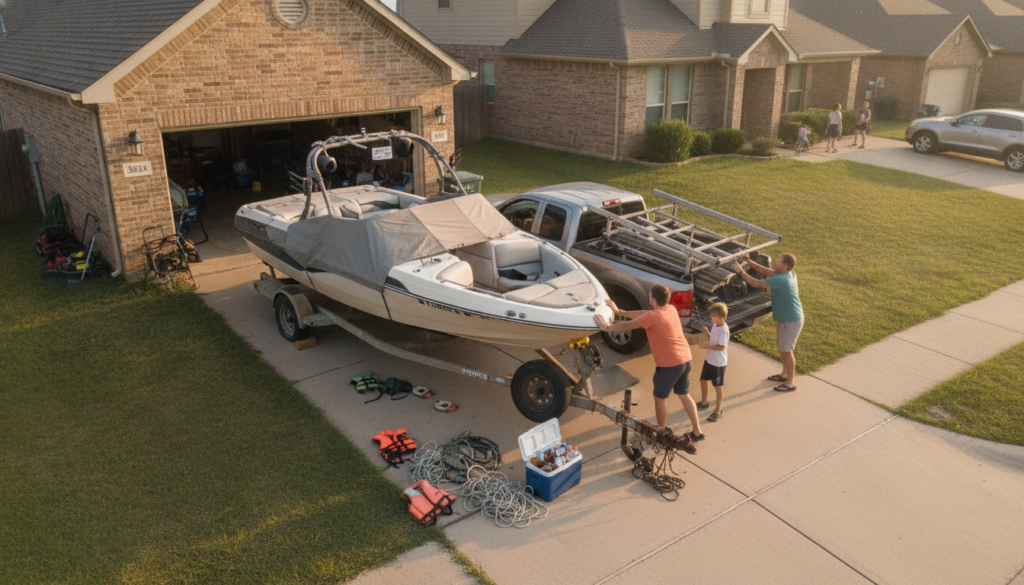
Most DFW boat owners assume their boat is fully protected right up until the moment it isn’t. We hear it all year. Someone buys a boat, hauls it home, and figures the home policy has it handled. It usually doesn’t, at least not the way they think.
Boating is a big part of life out here. Lake Lewisville, Grapevine Lake, Lake Ray Hubbard, Possum Kingdom, Eagle Mountain Lake, and a dozen others sit within an easy drive, so plenty of local families spend spring through fall on the water. We talk to those families constantly, and the same gaps come up over and over.
At DRH Insurance, we would rather you understand your coverage before something goes wrong than after. So this is a walk through the common boat insurance mistakes DFW owners make, why each one matters, and what you can do about it. None of this is meant to scare you off the lake. It is just the stuff we wish every boater knew before launch day.
Mistake 1: Assuming your homeowners policy covers your boat
This is probably the single most frequent of all the common boat insurance mistakes DFW owners make. People bring the boat home and assume it falls under the home policy like the lawn mower or the patio furniture. For a canoe, a kayak, or a small dinghy with no motor, a homeowners policy sometimes does give you limited coverage. For anything with a real motor or real value, that assumption can leave a serious hole.
Homeowners policies cap boat coverage at a low limit, and that limit was built for a cheap little watercraft, not a bass boat, pontoon, ski boat, or wake boat worth many thousands of dollars. There is a bigger problem too. Homeowners policies generally give you no liability coverage while you are out on the water. So if your boat injures someone or damages another vessel or a dock, the home policy may not respond at all.
Think about what on-water liability actually looks like. A packed summer Saturday on Lake Grapevine. Boats everywhere, swimmers, jet skis, tubers. If an accident happens and you are found responsible, the bill can stack up fast between injuries, property damage, and legal costs. A separate boat policy is built for exactly those risks. A homeowners policy is not.
How to avoid it
- Don’t assume. Ask specifically what your current home policy does and does not cover for your type of boat and motor.
- Understand that for most motorized boats, a dedicated watercraft policy exists for a reason.
- Talk through on-water liability options with an agent so you know how you would be protected if you caused an accident.
Mistake 2: Not understanding how your boat’s value is settled
Of all the common boat insurance mistakes DFW owners make, this one usually stings the most, because it decides how much you actually get after a total loss. Boat policies settle value in a few different ways, and the differences are big.
Here are the three you will run into most:
- Actual Cash Value (ACV): Pays the depreciated value of the boat at the time of loss. The insurer subtracts for age and wear. A ten-year-old boat settles for far less than you paid.
- Replacement Cost: Aims to replace the boat with a comparable new one, generally without the same depreciation hit, within the terms of the policy.
- Agreed Amount (Agreed Value): You and the insurer settle on a set value up front. That is what gets paid for a covered total loss, with no fight over depreciation afterward.
None of these is automatically right or wrong. They are options with trade-offs, and the best fit depends on your boat, its age, and your budget. The mistake is not knowing which one you have. We meet owners who were sure they would get a full replacement after a total loss, then found out their policy was written on an actual cash value basis and the check reflected years of depreciation.
How to avoid it
- Read how your policy settles a total loss. If you aren’t sure, ask flat out: is this ACV, replacement cost, or agreed amount?
- Understand that the cheapest-looking quote may be settling value differently than a fuller one.
- Revisit the settlement basis when your boat ages or when you trade up to a newer one.
Mistake 3: Giving inaccurate information when you set up the policy
Your policy is only as good as the information behind it. Another of the common boat insurance mistakes DFW owners make is describing the boat loosely when they get the quote. Guessing at the value. Understating the engine. Being vague about how the boat will really get used.
It usually isn’t deliberate. Someone rounds the value down, forgets to mention a second high-powered motor, or doesn’t think to say they take the boat out of state a few times a year. But those details shape the coverage. If what’s on file doesn’t match reality, you can end up underinsured, or a claim can get questioned because the boat wasn’t what the policy described.
Use is a big one. A boat used strictly for weekend fun is a very different risk from a boat running paid charters, guide trips, or regular competition. Which leads straight into a related set of mistakes.
How to avoid it
- Be precise about the boat’s make, model, year, engine, and realistic value.
- Describe how you actually use the boat, including where and how often.
- Update your policy whenever something changes, like a new motor, new electronics, or a shift in how you use the boat.
Mistake 4: Overlooking named operators and who is driving
Car insurance has trained most of us to expect permissive use. A friend or family member borrows your car with permission, and they are generally covered. Boat policies often don’t work that way, and it catches people off guard. Among the common boat insurance mistakes DFW owners make, assuming a boat behaves like a car sits near the top.
A lot of marine policies list specific named operators. If someone who isn’t listed is at the helm when an accident happens, the claim may not be covered. Picture handing the wheel to your brother-in-law so you can help the kids with the tube, and something goes wrong on his watch. If he isn’t an approved operator, you could be staring at a denial on a loss you figured was covered.
How to avoid it
- Know exactly how your policy handles operators. Is it named operators only, or does it allow permissive use?
- If several people regularly drive your boat, make sure the policy says so.
- Before you let a guest take the helm, understand what your coverage requires.
Mistake 5: Ignoring navigation and use limits
Boat policies often include geographic navigation limits, meaning the waters where your coverage applies. For most DFW boaters sticking to local lakes, this rarely comes up. But owners who trailer the boat to the Gulf Coast, to lakes in other states, or well past their usual water can run into trouble if those trips fall outside the policy’s defined area.
Blow past your navigation limits and you can void coverage for a loss that happens outside the covered zone. That is a rough thing to find out when you are hundreds of miles from home. This is one of the quieter common boat insurance mistakes DFW owners make, because it only surfaces when you go somewhere new.
Use restrictions matter too. Take a recreational boat into a race, or use it for commercial work like paid charters or guided trips, without the right endorsements, and you can walk straight into a denied claim. The policy was priced and written for recreational use. A commercial or competitive loss simply isn’t what it covers.
How to avoid it
- Check your navigation limits before any road trip with the boat in tow.
- If you’re planning a Gulf Coast run or an out-of-state lake trip, ask whether your coverage follows you there.
- Never assume a recreational policy covers paid use or racing. Ask about endorsements first.
Maintenance and storage: the common boat insurance mistakes DFW owners make most often
This category catches a lot of careful people. Boat policies are built to cover sudden, accidental losses, not the slow slide that comes from neglect. Some of the most frustrating of the common boat insurance mistakes DFW owners make happen in the garage, the driveway, and the storage lot, not out on the water.
Policies typically exclude damage from gradual wear and tear, corrosion, and mechanical breakdown tied to bad upkeep. If an engine dies and the insurer finds that routine service got skipped for years, that claim can be denied as a maintenance problem rather than a sudden accident. Documentation is what separates a covered sudden failure from an excluded wear-and-tear problem.
Keep maintenance records
No maintenance records is one of the most common reasons marine claims get denied. If you can’t show the boat was serviced properly, the insurer has little to work with when deciding whether a loss was sudden or the result of neglect. Keep receipts, service logs, and dates for oil changes, winterizing, impeller replacements, and any professional work.
Store and transport your boat properly
Bad storage or transport is another big one. If a boat isn’t secured right on its trailer and gets banged up on the way to the lake, or if it sits somewhere that invites damage, the loss may not be covered. DFW weather doesn’t help. Hail, high winds, and sudden storms are a regular part of life here, and how and where you store the boat changes your risk.
Watch out for pests, mold, and standing water
Damage from insects, rodents, other animals, and mold is frequently excluded. A boat that sits damp and dirty for months can grow mold or turn into a home for critters, and that kind of damage usually lands on the owner, not the policy. Regular cleaning, drying, and airflow go a long way.
How to avoid it
- Keep a simple maintenance file with dates and receipts. It is your best friend at claim time.
- Secure the boat properly whenever you trailer it, and double-check the tie-downs and straps.
- Store the boat clean and dry, and check on it in the off-season so small problems don’t turn into big ones.
- Protect against DFW hail and wind with covered or indoor storage when you can.
Common boat insurance mistakes DFW owners make during a claim
Even owners with solid coverage can trip during the claims process itself. These are some of the most avoidable common boat insurance mistakes DFW owners make, and they usually come down to paperwork and timing.
Signing a boatyard work order with a waiver of subrogation
This one sounds technical, but it is worth understanding in plain English. Subrogation is your insurer’s right to recover costs from whoever actually caused the damage. If a boatyard or repair shop hands you a work order that includes a waiver of subrogation, and you sign it, you may be handing away your insurer’s ability to go after the responsible party. That can put your own claim at risk. Read what you sign at the yard. If you spot unfamiliar waiver language, stop and ask before you put your name on it.
Confusing routine towing with salvage
If your boat breaks down and needs a tow back to the ramp, that is routine towing. Salvage is a different animal. Salvage means recovering a boat that is sunk, grounded, stranded, or otherwise in a jam that takes a serious operation, and salvage bills can be enormous. Policies often treat towing and salvage differently, and some owners assume a quick tow is covered the same way a full salvage would be. Know the difference, and know what your policy says about each, before you are stuck on the water making calls under pressure.
Incomplete documentation and missed deadlines
Thin documentation, missing information, and blown reporting deadlines are common reasons claims get denied or dragged out. After a loss, insurers generally want prompt notice, clear details, photos, and supporting records. Wait too long or send in a skimpy claim, and you give the process every excuse to stall.
How to avoid it
- Read any boatyard paperwork carefully, and ask about waiver of subrogation language before signing.
- Understand the difference between towing and salvage in your policy so a big bill doesn’t blindside you.
- Report a loss promptly, document everything with photos, and keep copies of what you submit.
- Keep your agent’s number handy so you have someone local to call when something happens.
Mistake: forgetting about wreck removal and environmental liability
This is one of the less obvious common boat insurance mistakes DFW owners make, because it involves costs most people never think about until they are staring at them. If your boat sinks or is destroyed, you may be legally on the hook for removing the wreck. If fuel or oil leaks into the water, you can face environmental cleanup liability. Either one can run high.
Here is the point to remember. These coverages are often separate from standard physical damage coverage. A policy that covers damage to the boat itself does not automatically cover hauling out a sunken wreck or cleaning up a fuel spill. Owners sometimes find that gap only after an incident, which is the worst possible time.
How to avoid it
- Ask specifically whether your policy addresses wreck removal and environmental or fuel-spill liability.
- Don’t assume physical damage coverage includes these costs. Treat them as separate questions.
- Factor in your lake, your boat size, and your fuel capacity when you think through these risks.
Mistake: letting coverage go stale as your boating life changes
A boat policy is not a set-it-and-forget-it purchase. One of the subtler common boat insurance mistakes DFW owners make is riding the same coverage for years while everything about their boating life shifts. You add a bigger motor. You buy new electronics, a trolling motor, a sound system. You start trailering to new lakes. The kids grow up and start driving the boat. Each of those changes can affect whether your coverage still fits.
We see this with a composite of boat owners we work with across DFW. Someone insures a modest first boat, upgrades to a bigger one a few years later, and just assumes the old policy details carried over clean. Then they add thousands of dollars in gear and never touch the policy. If that equipment gets damaged or stolen, there can be a gap between what they thought was covered and what the policy actually lists.
How to avoid it
- Review your boat coverage at least once a year, ideally before the season starts.
- Report upgrades, added equipment, and new operators as they happen, not years later.
- Reassess your value settlement basis as the boat ages or as you trade up.
A quick DFW boat owner checklist
If you want a simple way to dodge the common boat insurance mistakes DFW owners make, run through this short list before your next season on the water:
- Confirm you have a real boat policy, not just a thin sliver of coverage under your homeowners policy.
- Know how your policy settles a total loss: ACV, replacement cost, or agreed amount.
- Make sure the boat’s value, engine, and use are described accurately.
- Verify who is covered to operate the boat and whether permissive use applies.
- Check your navigation limits before any trip beyond your usual lakes.
- Keep clean maintenance records and store the boat clean, dry, and secure.
- Understand your towing versus salvage coverage, and watch for waiver language at the boatyard.
- Ask whether wreck removal and environmental liability are included or separate.
- Review everything once a year and update it when your boat or habits change.
Let’s talk through your coverage
A boat is an investment and a huge source of fun for DFW families, and the goal of all this is simple: fewer surprises, more good days on the water. The common boat insurance mistakes DFW owners make are almost always avoidable once you understand how boat coverage really works and how it differs from your auto and home policies.
If you have questions about your current boat policy, or you’re shopping and want to make sure none of these gaps apply to you, our team at DRH Insurance is glad to walk through the options with you in plain English. No pressure, just a local conversation to help you understand your choices and feel good before your next launch day. Reach out whenever you’re ready, and we’ll help you sort through what makes sense for your boat, your lake, and your family.
Frequently asked questions
Does my homeowners policy cover my boat in Dallas-Fort Worth?
Homeowners policies usually offer only very limited coverage for small, non-motorized watercraft, and often no liability coverage at all while you’re on the water. For most motorized boats like bass boats, pontoons, and ski boats, a separate boat policy is generally needed. It’s worth confirming exactly what your home policy does and does not cover for your specific boat.
What is the difference between actual cash value and agreed value on a boat policy?
Actual cash value pays the depreciated worth of your boat at the time of a total loss, so age and wear cut into the payout. Agreed value sets a fixed amount up front that gets paid for a covered total loss, with no depreciation fight. Replacement cost aims to replace the boat with a comparable new one within the policy terms. The right option depends on your boat and budget.
Can anyone drive my boat, or do I need to list operators on my policy?
Unlike auto insurance, many boat policies list specific named operators instead of allowing broad permissive use. If someone who isn’t listed causes an accident while driving your boat, the claim may be denied. If several people regularly operate your boat, make sure your policy reflects that.
Why do boat insurance claims get denied in DFW?
Common reasons include missing maintenance records, damage from wear and tear or neglect, operating outside the policy’s navigation limits, using a recreational boat for commercial or racing purposes without endorsements, and incomplete or late claim documentation. Signing boatyard paperwork with a waiver of subrogation can also hurt a claim. Keeping good records and reporting losses promptly helps avoid most of these.
Does boat insurance cover towing and salvage the same way?
Not usually. Routine towing after a breakdown is treated differently from salvage, which means recovering a sunk, grounded, or stranded boat and can carry much larger costs. Review your policy so you know how each is handled before you ever need help on the water.
Are wreck removal and fuel spill cleanup included in boat insurance?
Often they’re separate from standard physical damage coverage, which pays for damage to the boat itself. Wreck removal and environmental liability for a fuel or oil spill can be substantial and may need to be addressed specifically. Ask your agent whether these costs are included or need to be added.
Sources
- Boat Insurance: 5 Mistakes That Get Your Claim Denied – BoatTEST
- 7 common boat insurance claims and how to avoid them.
- Top Technical Errors That Invalidate Yacht Insurance Claims – Claimar
- Common Reasons for Boat Claim Denials | Blog – The Insurance Outfit
- 9 Common Boat Insurance Policy Exclusions | InsuraMatch
- 10 Hidden Marine Insurance Risks Every Boat Owner Must Know