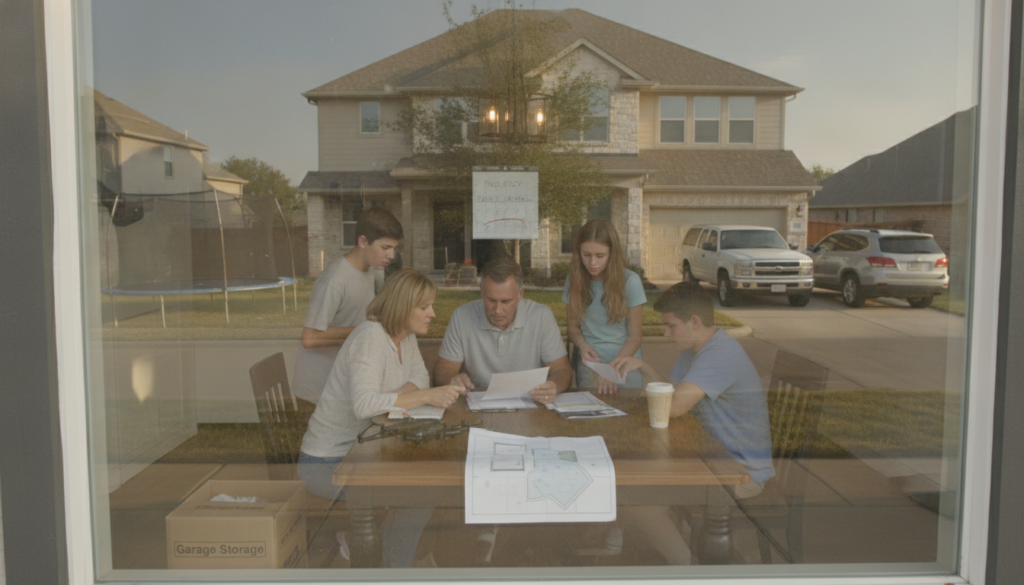
Ask a Dallas-Fort Worth homeowner about insurance problems and two words come up first: hail and flood. Fair enough. We get our share of spring storms, and plenty of people here have learned the hard way that a standard policy does not cover rising water. But in our day-to-day work with DFW families, the claims that blindside people are rarely about hail or flood. They are quieter. A rebuild cost that drifted out of date. A liability limit nobody has looked at in a decade. A jewelry box full of items the policy never really covered.
This post is about those quieter problems. We want to walk through the most common homeowners insurance mistakes DFW homeowners make beyond hail and flood, explain why they happen, and show you how to catch them before you ever file a claim. None of this tells you exactly what to buy. Every home and family is different, and those decisions are worth talking through with a local agent. But knowing where the gaps tend to hide puts you in a far stronger position.
The underinsurance trap: one of the most expensive homeowners insurance mistakes DFW homeowners make
If we had to name one issue behind the biggest surprises at claim time, it would be underinsurance. This is one of the most common home insurance errors Texas homeowners run into, and it almost never feels like a mistake while it is happening. Your policy renews, the number on the declarations page looks like a lot of money, and you move on. The trouble shows up only when you actually need to rebuild.
The root of the problem is a mix-up between three very different numbers: market value, purchase price, and rebuild cost.
- Market value is what your home would sell for. It folds in the land, the neighborhood, the school district, and the mood of the local market.
- Purchase price is what you paid, which may be years out of date and also includes the land.
- Rebuild cost is what it would actually take to reconstruct your home from the foundation up, using today’s labor and materials, at today’s prices.
Dwelling coverage, the core of your homeowners policy, is supposed to be based on rebuild cost. But a lot of people set their coverage limit around what they paid or what the home would sell for. In parts of DFW where land values run high, the market price can sit well above the rebuild cost, so a homeowner thinks they are over-covered. In other situations, especially after years of climbing construction costs, the rebuild number quietly passes the coverage limit. That is where people get hurt.
Why rebuild costs keep moving
Rebuild cost is not a fixed figure. Labor rates change. Lumber, drywall, and roofing swing with the broader economy. After a major regional storm, demand for contractors spikes and prices follow. A rebuild estimate that was accurate three years ago may be meaningfully low today, purely from inflation in construction costs. This drift is one of the sneakiest homeowners insurance mistakes DFW families make, because it needs no action on your part. You do nothing, and the gap grows.
Renovations that never made it onto the policy
The other big driver of underinsurance is improvements. You finish the attic into a bonus room. You add a covered patio. You redo the kitchen with better cabinetry and countertops. You trade builder-grade everything for custom finishes. Each of those raises what it would cost to rebuild the home, and none of them updates your insurance automatically. If you never tell your agent, the policy keeps protecting the house you bought, not the house you have now. Among DFW homeowners policy errors, failing to report renovations is one of the most common and one of the easiest to fix.
Take a composite of families we work with. A couple buys a 1990s home, lives in it for eight years, and over that time redoes the kitchen, replaces the flooring throughout, and adds a sunroom. Their dwelling limit never changed. If a serious loss hit, the payout would be built around the original, unimproved home, and they would cover the difference out of pocket. Nothing dramatic happened. The coverage just never kept pace with the house.
How to stay ahead of underinsurance
You do not need to become a construction estimator to avoid this. A few habits go a long way:
- Ask your agent how your dwelling limit was calculated, and whether it reflects rebuild cost rather than market value.
- Tell your agent about renovations and major upgrades when they happen, not years later.
- Ask whether your policy includes any inflation adjustment feature, and how it works.
- Give the dwelling number a look at renewal, even if just for a minute.
These small check-ins are the single best defense against one of the costliest home insurance errors Texas homeowners face.
Skimming the policy: how misread details become DFW homeowners policy errors
The declarations page, that one-page summary at the front of your policy, is where almost everyone stops reading. We understand why. The full policy is long and written in insurance language. But the declarations page gives you the limits, not the rules. The actual terms, the exclusions, and your responsibilities after a loss live in the pages behind it. Not reading those pages is one of the quieter DFW homeowners policy errors, and it tends to surface at the worst possible moment.
Assuming everything is covered
The most frequent misunderstanding is the belief that a standard homeowners policy covers all damage from all causes. It does not, and it was never built to. Flood is the classic example. Damage from rising water, overflowing creeks, and storm surge is generally excluded from standard home policies and typically needs a separate flood policy. Many DFW homeowners only discover this after water has already come in. The gap is well known enough that we list it next to hail, but the broader lesson applies to every peril. Coverage is defined by what the policy says, not by what feels reasonable.
The deductible surprise
Here in Texas, deductibles are where a lot of people get a jolt. Many policies carry a flat dollar deductible for most claims but a separate percentage-based deductible for wind and hail. A percentage deductible is figured as a percentage of your dwelling coverage, not a fixed amount. On a higher-value home, that can translate into a far larger out-of-pocket number than homeowners expect. Not understanding which deductible applies to which type of loss is one of the common home insurance errors Texas homeowners discover only when a claim check comes in lower than they pictured.
Here is a simplified example of the mechanics, not a quote. If a home has a wind and hail deductible set as a percentage of its dwelling limit, the homeowner pays that calculated share before the policy pays anything on a hail claim. Two homes with the same contractor estimate can face very different out-of-pocket costs purely because of how their deductibles are structured. Knowing your deductible setup ahead of time means no surprises.
What to actually look for
You do not have to read your policy like a lawyer, but it helps to find and understand a few sections:
- The list of covered perils and, just as important, the exclusions.
- Every deductible that applies, including any separate wind and hail percentage deductible.
- The duties after loss section, which spells out what you have to do, and how fast, after damage occurs.
- Any sub-limits on specific categories of property.
If any of it reads like a foreign language, that is exactly the kind of thing to bring to your agent. Walking through the policy together is one of the simplest ways to avoid the homeowners insurance mistakes DFW families repeat year after year.
Personal property gaps: the belongings side of common home insurance errors Texas homeowners overlook
Most of the attention in a homeowners policy goes to the structure. But your belongings matter too, and this is where another cluster of homeowners insurance mistakes DFW homeowners make tends to hide.
The 50 to 70 percent assumption
In many standard policies, personal property coverage is set as a percentage of the dwelling limit, often somewhere in the range of 50 to 70 percent. People assume that is automatically enough. Sometimes it is. But if you have accumulated a lot over the years, that percentage may not cover the cost to replace everything you own. The only way to know is to add it up, and almost nobody does.
No home inventory
That brings us to the biggest personal property mistake of all: having no home inventory. After a serious loss, the burden falls on you to prove what you owned and what it was worth. Picture trying to list, from memory, every item in your kitchen, every tool in your garage, every piece of clothing in your closets, right after a stressful event. It is nearly impossible to do accurately, and holes in your list can mean underpayment or delays. A missing inventory is one of the most avoidable common home insurance errors Texas homeowners make, and fixing it costs nothing but time.
A good home inventory does not have to be fancy:
- Walk through each room with your phone and take video, narrating what you see.
- Photograph serial numbers, model numbers, and receipts for bigger items.
- Note approximate purchase dates and values for major belongings.
- Store the inventory somewhere outside the home, like cloud storage or email, so it survives whatever happens to the house.
- Update it when you make significant purchases.
High-value items and scheduled coverage
Standard policies often cap how much they will pay for certain categories, such as jewelry, firearms, fine art, collectibles, and sometimes electronics or cash. These sub-limits can be surprisingly low next to what the items are actually worth. If you own an engagement ring, an inherited watch, a firearm collection, or original artwork, the standard policy may cover only a fraction of its value in a loss.
The usual way to address this is scheduled coverage, sometimes called a floater or endorsement, which lists specific high-value items individually, often with an appraisal. Whether that makes sense for you is a conversation to have with your agent. But not knowing the sub-limits exist is one of the DFW homeowners policy errors that leads to the most disappointment at claim time. Plenty of homeowners never update their policies to reflect valuable items they have acquired. Do not assume your most prized possessions are fully covered just because they are inside the house.
Liability limits nobody looks at
Here is a part of your policy you have probably never thought about: personal liability coverage. It is the piece that responds if someone is injured on your property, or if you are found responsible for injury or damage to others. It can be one of the most important protections your policy provides.
Many policies carry a default liability limit, sometimes around 100,000 dollars. That number has stayed common for a long time, even as the cost of a serious injury, a lawsuit, or a stack of medical bills has climbed well past it. If someone is seriously hurt and the claim runs over your liability limit, the gap can come out of your own assets. For a family that has built up savings, home equity, and other resources, that is a real exposure. Liability gets overlooked precisely because it feels abstract. Right up until the day it is not.
Where umbrella coverage fits
For households that want protection beyond what a standard home policy offers, an umbrella policy sits on top of your home and auto liability and adds another layer. One detail worth knowing: insurers often require your underlying home and auto liability limits to hit a certain level before you can add an umbrella. So the two decisions are linked. Reviewing your liability limit is a natural first step, and whether an umbrella makes sense for your situation is a good question for your agent. We are not here to tell you a number is right or wrong, only that leaving the default limit unexamined is a classic example of the common home insurance errors Texas families overlook.
Shopping on price alone: a costly entry on the list of homeowners insurance mistakes DFW buyers make
Price matters. We get it, and nobody wants to overpay. But choosing a policy on price alone is one of the most common homeowners insurance mistakes DFW buyers make, because the cheapest option often earns that price by covering less.
Two policies can look alike on the surface and be very different underneath. The lower-priced one might carry a higher deductible, a lower dwelling limit, thinner personal property coverage, more exclusions, or a smaller liability limit. On paper you saved money. In reality you may have bought a different, smaller promise. When a claim arrives, those differences get very real, and the savings can evaporate in an instant.
There is also the question of how a claim actually gets handled. The experience of filing, the responsiveness, the clarity of the process, and the service behind the policy all matter enormously when you are standing in a damaged home. A policy is only as good as what happens when you need it. We will not make claims about any specific carrier here, but we will say this: comparing policies means comparing coverage, deductibles, limits, and service, not just the bottom-line figure. Price is one factor among several. Treating it as the only one is where a lot of DFW homeowners policy errors begin.
When you compare options, line them up on the things that actually differ:
- Dwelling limit and how it was calculated.
- Each deductible, including wind and hail.
- Personal property limit and any sub-limits.
- Liability limit.
- Exclusions and endorsements.
- The service and claims support behind the policy.
The set it and forget it problem
Insurance is easy to put on autopilot. The renewal arrives, the payment goes through, and the policy quietly rolls forward year after year. The problem is that your life does not stand still, and a policy that fit you five years ago may not fit you now. Treating insurance as a one-time setup is one of the most widespread homeowners insurance mistakes DFW families make, because it turns a solvable problem into a slow drift toward being underinsured or mismatched.
Life events that should trigger a review
Certain moments are natural prompts to take a fresh look at your coverage:
- Finishing a renovation or addition.
- Making a significant purchase, like jewelry, electronics, or equipment.
- Building a backyard structure such as a shed, workshop, or detached garage.
- Changes in who lives in the home.
- Starting a business or working from home in a new way.
- Paying off the mortgage, which can change how you think about coverage.
Do not forget other structures
Speaking of backyard structures, this one deserves its own mention. Standard policies include coverage for other structures, meaning detached buildings like sheds, fences, detached garages, and sometimes outdoor features. But that coverage is usually set as a percentage of your dwelling limit, and homeowners rarely check whether it is enough. If you build a sizable detached workshop or add significant fencing, the default other-structures limit may fall short. These get overlooked quietly and often, which is why they land on the list of DFW homeowners policy errors.
An annual policy review
The simplest fix for the set-it-and-forget-it problem is an annual review. Once a year, take a short look at your coverage, update your agent on anything that changed, and confirm the limits still make sense. This single habit catches a huge share of the homeowners insurance mistakes DFW families would otherwise carry forward indefinitely. It does not have to be a long meeting. It just has to happen.
Claim-time mistakes that make a hard day harder
Even homeowners with excellent coverage can run into trouble if the claims process goes sideways. After a loss, people are stressed, and understandable instincts can work against them. These claim-time missteps are among the common home insurance errors Texas homeowners make under pressure, and knowing them in advance helps a lot.
Waiting too long to report
Delaying the report of damage can complicate a claim. Policies generally include duties to report losses promptly, and waiting can make it harder to tie the damage to a specific event. If a storm hits, report the damage in a timely way rather than putting it off.
Not documenting thoroughly
Documentation is your friend. Before cleanup and before repairs, take plenty of photos and video of all the damage from multiple angles. The more thorough your record, the smoother the conversation about the claim tends to go. Thin documentation is one of the most common reasons the process bogs down.
Throwing things away too soon
It is natural to want to clear out damaged items and move on. But getting rid of damaged property before it has been documented and reviewed can create problems, because the evidence of the loss is gone. Hold on to damaged items, or at least photograph them thoroughly, until you have guidance on next steps.
Starting permanent repairs too early
There is an important difference between emergency measures and permanent repairs. You are generally expected to take reasonable steps to prevent further damage, like tarping a roof or stopping a water leak. That is good and expected. But jumping straight into permanent, full repairs before the loss has been documented and evaluated can complicate the claim. Protect the property from getting worse, then coordinate on the permanent fixes.
Incomplete or inaccurate information
Finally, give complete and accurate information. Guessing at values, leaving out details, or submitting an incomplete picture can slow things down and create confusion. If you are not sure about something, say so rather than filling in a blank with a guess.
The too-many-small-claims issue
One more claim-related wrinkle that surprises people: filing frequent small claims can work against you over time. A history of many claims can affect future premiums and can make coverage harder to secure down the road. For minor issues that fall near or below your deductible, it is often worth weighing whether a claim makes sense at all. This is not a rule, just a tradeoff worth understanding, and it rounds out the list of homeowners insurance mistakes DFW homeowners can avoid with a little foresight.
Pulling it all together
None of these problems are dramatic on their own. That is exactly why they persist. The rebuild cost that drifts. The policy nobody reads past page one. The belongings that were never inventoried. The liability limit left on default. The policy chosen purely on price. The coverage that never got reviewed. The avoidable missteps at claim time. Each one feels minor. Together they account for most of the homeowners insurance mistakes DFW families bring to us after the fact, wishing they had looked sooner.
The good news is that every one of these is fixable, and most cost nothing more than a conversation and a little attention. You do not need to memorize your policy or become an expert. You just need to know where the gaps tend to hide, and check them before you ever file a claim. The homeowners who avoid these common home insurance errors Texas families run into are rarely the ones who studied the hardest. They are the ones who reviewed their coverage regularly and asked questions.
If any of this raised a question about your own home, that is a good reason to take a fresh look. Our team at DRH Insurance Group works with families and homeowners across Dallas-Fort Worth every day, and we are always glad to walk through your coverage, explain the parts that feel confusing, and talk through the options that fit your situation. There is no pressure in that conversation, just a clearer picture of where you stand. Whenever you are ready, we are here to review it with you.
Frequently asked questions
What is the most common homeowners insurance mistake DFW homeowners make?
Underinsuring the home is one of the most common and costly mistakes we see. It usually happens when the dwelling limit is based on market value or purchase price instead of the actual cost to rebuild, which can drift out of date as construction costs rise and renovations go unreported. A quick review of how your dwelling limit was calculated can catch it early.
Does a standard homeowners policy in Texas cover flood damage?
Generally no. Damage from rising water and flooding is typically excluded from standard homeowners policies and usually requires a separate flood policy. Many DFW homeowners only learn this after a loss, so it is worth confirming your situation with an agent before storm season.
Why do I have a separate wind and hail deductible on my Texas home policy?
In Texas, many policies carry a percentage-based deductible for wind and hail that is figured as a percentage of your dwelling coverage rather than a flat dollar amount. On a higher-value home that can mean a larger out-of-pocket cost than people expect. Knowing which deductible applies to which type of loss ahead of time prevents surprises at claim time.
How often should I review my homeowners insurance policy?
A yearly review is a good habit, plus a check-in after any major change such as a renovation, a significant purchase, a new backyard structure, or a change in who lives in the home. These updates keep your coverage lined up with your current home and belongings. Letting a policy run on autopilot for years is how coverage gaps quietly form.
Do I need extra coverage for jewelry, firearms, or art?
Possibly. Standard policies often place low sub-limits on categories like jewelry, firearms, and fine art, so your most valuable items may only be partially covered in a loss. Scheduled coverage, sometimes called a floater, can list those items individually, and whether that fits your situation is a good question to discuss with your agent.
What should I do right after my home is damaged in a storm?
Report the damage promptly, take thorough photos and video before cleanup, and take reasonable steps to prevent further damage such as tarping a roof. Avoid throwing away damaged items or starting permanent repairs before the loss is documented and reviewed. Providing complete, accurate information from the start helps the whole process go more smoothly.
Sources
- 7 Homeowners Insurance Mistakes Texas Owners Make | TWFG
- Common Mistakes That Lead to Underinsurance and How to Avoid Them – Gallagher
- The 7 Biggest Home Insurance Mistakes Texas Homeowners Make
- 5 Things Most Homeowners Get Wrong About Coverage – Whiteside Insurance Agency
- Top 10 Mistakes Homeowners Make During Insurance Claims – Santex Public Adjusters
- What Happens If Your Home Is Underinsured? – Bluefield Realty Group