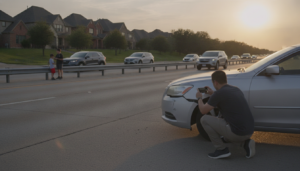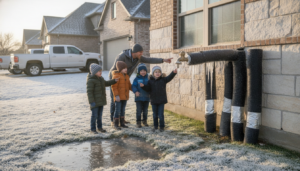
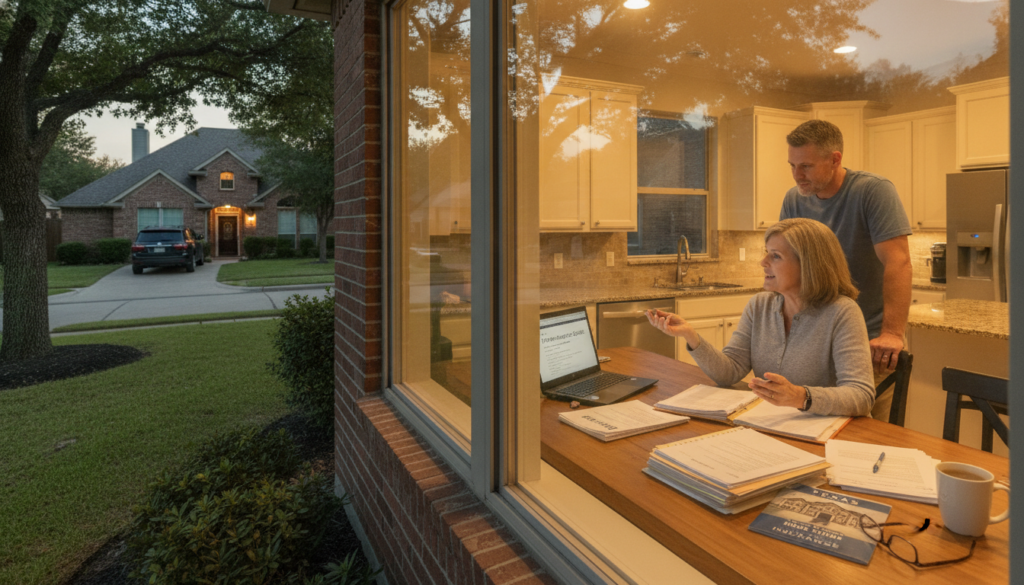
If you own a home anywhere from Fort Worth to Frisco, Arlington to Allen, you already know the Dallas-Fort Worth area has its own personality. That includes the weather. Hailstorms, high winds, and the occasional tornado warning are part of life here, and those local realities are a big reason DFW homeowners insurance rates tend to run higher than the Texas and national averages. Add rising construction costs and property values that keep climbing, and it makes sense that more folks are looking into their coverage before they ever pick up the phone.
At DRH Insurance, we talk to homeowners across the Metroplex every week. One of the most common questions we hear is simple. Where do I even start? So we put together this step-by-step guide on how to get homeowners insurance quote DFW residents can actually use. We’re not trying to sell you anything here. The goal is to help you walk into any quote conversation prepared and clear on what you’re looking at.
Why Getting a Homeowners Insurance Quote in DFW Is a Little Different
Before we get to the checklist, it helps to understand why the DFW market has its own flavor. Insurance comes down to risk, and the risks here are shaped by the region we live in.
First, the weather. North Texas sits squarely in an area that sees frequent, severe hailstorms and strong straight-line winds every spring and summer. Roofs take a beating here in a way they simply don’t in milder climates. Because of that, wind and hail coverage, and the way those deductibles are set up, is one of the most important parts of any DFW homeowners policy. We’ll come back to it later.
Second, the cost to rebuild. Materials and labor have gotten more expensive across the country, and DFW’s fast growth keeps demand for both high. That matters because homeowners insurance is built around what it would cost to rebuild your home, not what you paid for it or what it would sell for. As rebuild costs climb, so do the coverage amounts insurers use to calculate a quote.
Third, DFW is a huge, varied region. A 1980s ranch home in an established Dallas neighborhood, a brand-new build in a Denton County subdivision, and a brick two-story in Southlake all carry very different characteristics. That’s exactly why learning how to get homeowners insurance quote DFW homeowners can rely on starts with gathering accurate details about your specific property. The more precise your information, the more accurate your quote will be, and the more useful it is to you.
A quote is only as good as the information behind it. A guess about your square footage or roof age can lead to a number that changes a lot once the details get verified, so getting it right up front saves everyone time.
Step 1: Gather the Information About You
Every homeowners quote starts with a little information about the person who will own the policy. None of it is meant to be intrusive. It just helps the insurer understand who they’d be insuring and what your history looks like. Here’s what to have handy.
Your basic personal information
- Your full legal name and date of birth. Standard identification details for any policy.
- Your Social Security number. Many companies request this during underwriting. It’s also tied to how credit-based insurance scores get pulled, which we’ll explain below.
- Marital status and, in some cases, employment history. Some carriers ask about these as part of their standard questions.
Your insurance history
Insurers want a picture of your past coverage and claims. Be ready to share:
- Your current or most recent insurance provider, if you have one, along with your existing coverage details.
- Any prior claims from roughly the last five to seven years. Think a past hail claim on a roof or a water damage claim.
Behind the scenes, insurers may pull what’s called a CLUE report, short for Comprehensive Loss Underwriting Exchange. It summarizes claims history tied to you and your property. You don’t need to produce it yourself, but knowing it exists explains why an insurer already seems to know about a past claim. If you’re not sure what’s on yours, that’s a good thing to talk through with an agent.
Your credit-based insurance score
In Texas, insurance companies are allowed to use credit-based insurance scores as one factor when they assess risk. It’s not the same as a lending credit score, though it draws on similar information. Here’s the part worth knowing. A company can’t deny you coverage based on credit alone, but a stronger credit profile can factor favorably into your rate. If your credit has improved recently, that’s worth mentioning, and it’s another reason to revisit your coverage from time to time.
When people ask us how to get homeowners insurance quote DFW households can trust, this is one area we always encourage folks to understand rather than fear. It’s one of several ingredients in the recipe, not the whole meal.
Step 2: Gather the Information About Your Home
This is the heart of the quote. The details of your actual property drive most of the numbers, so accuracy matters more here than anywhere else. Let’s break it into the categories insurers care about.
The property address and location
It starts with the exact address of the home you want to insure. Location alone tells an insurer a surprising amount: the local weather patterns, the neighborhood, even how close you are to a fire station. Proximity to a fire station can influence your premium, since faster response times generally mean less potential damage. Two nearly identical homes a few miles apart in DFW can land on different numbers purely because of location factors like these.
The age and construction of your home
These details describe the bones of the house:
- Year built. Older and newer homes carry different considerations.
- Home style. Ranch, colonial, two-story, and so on.
- Square footage. A big input for estimating rebuild cost.
- Exterior finish. Brick, stone, wood, stucco, or a mix. Brick and stone construction is common across DFW and can factor favorably compared to some other materials.
- Roof age and type. In North Texas, this is one of the most important details of all. Given how often our roofs face hail and wind, insurers pay close attention to when your roof was last replaced and what it’s made of.
If you’ve replaced your roof recently, have the year handy. It’s one of the most relevant things you can bring to a quote conversation in this region.
Your home’s replacement cost
This one deserves its own spotlight because it gets misunderstood so often. Replacement cost is an estimate of what it would take to rebuild your home from the ground up with similar materials and quality. It is not your market value, and it is not your purchase price. In a hot DFW housing market, your home’s sale price might be far higher than its rebuild cost. In other cases, the rebuild cost might surprise you on the high side because of construction expenses. Either way, this figure is a primary driver of your quote, so understanding the difference is central to knowing how to get homeowners insurance quote DFW homeowners can actually rely on.
Features, amenities, and structures
Insurers want a full picture of what’s on your property:
- Number of bathrooms and fireplaces.
- Detached structures like garages, workshops, or storage sheds.
- Pools and trampolines. Great for summer in Texas, but they also add liability considerations, so insurers ask about them.
Improvements and upgrades
If you’ve put money into your home, tell your agent. Recent renovations and system upgrades can genuinely matter:
- Roof replacement (worth repeating because it’s so significant in DFW).
- Electrical system upgrades.
- Plumbing updates.
- HVAC and other major system work.
Older systems can be seen as higher risk, so documenting that you’ve modernized them helps paint an accurate, and often more favorable, picture.
Safety and security features
These are the details people most often forget, and they can qualify you for discounts. Be ready to mention:
- Burglar and security alarm systems
- Smoke detectors
- Fire sprinkler systems
- Smart home technology, like water-leak sensors and smart thermostats
- Deadbolt locks
We won’t quote you a specific savings figure, since every situation is different. But these features are exactly the kind of thing worth mentioning, because they can factor favorably into your quote.
Occupants, pets, and how you use the home
A few final details round out the picture:
- Who lives in the home, including young children.
- Any dogs, and their breed. Dog bites are a real liability concern, so insurers ask about this.
- How the home is used. Is it your primary residence, a second home, or do you run a business out of it? Each answer changes the conversation.
That last point matters more than people expect. If you run a small business from your home, and plenty of DFW entrepreneurs do, a standard homeowners policy may not cover business equipment or business-related liability. That’s a perfect example of something to flag early, because it might mean adding an endorsement or looking at a separate small business policy.
How to Get Homeowners Insurance Quote DFW Homeowners Can Actually Compare
Once you’ve gathered your information, you’re most of the way there. But a quote isn’t a single number. It’s a package of coverages, limits, and deductibles. Understanding those pieces is what turns a confusing figure into a decision you can feel good about.
The core coverages in a standard policy
Most standard homeowners policies in DFW are built around a familiar set of protections. Here’s the plain-English version:
- Dwelling coverage. This covers the physical structure of your home, the part tied directly to that replacement cost figure we discussed.
- Other structures coverage. This applies to detached items like a fence, garage, or shed.
- Personal property coverage. This helps with your belongings: furniture, clothing, electronics, and so on.
- Liability protection. This helps if someone is injured on your property or you’re found responsible for damage to others.
- Loss of use coverage. This helps with living expenses if a covered event makes your home temporarily uninhabitable.
When you’re figuring out how to get homeowners insurance quote DFW families can genuinely compare, make sure you’re looking at the same coverages and limits across every quote. A lower number that leaves out an important protection isn’t really a lower number. It’s a different product.
Coverage options worth understanding in North Texas
Because of our weather and rising rebuild costs, there are a handful of options DFW homeowners often want to understand before they decide. We’re not telling you which to buy. These are simply worth a conversation:
- Extended replacement cost coverage. This can provide a cushion above your dwelling limit, which some homeowners consider given how quickly rebuild costs have moved.
- Wind and hail coverage limits. Since hail is so central to the DFW experience, understanding exactly how your policy treats wind and hail is one of the most important things you can do.
- Flood insurance. Here’s a big one people miss. Standard homeowners policies do not include flood coverage. Flood is a separate policy. If you’re in an area with any flood exposure, and parts of DFW certainly have it, this is worth asking about specifically.
Understanding deductibles, especially wind and hail
Here’s a detail that catches many new Texas homeowners off guard. In Texas, wind and hail deductibles are often percentage-based rather than a flat dollar amount. Instead of a set figure, your wind and hail deductible might be something like 1% to 5% of your home’s insured value.
Why does that matter? Because a percentage of a home’s insured value can add up to a meaningful out-of-pocket amount when you file a hail claim. On a home insured for a substantial rebuild cost, even a 1% deductible represents real money. This isn’t a reason to panic. It’s a reason to know your deductible before a storm, not after. Understanding your deductible structure is a core part of knowing how to get homeowners insurance quote DFW residents can plan around with clear eyes.
The single most common surprise we help North Texas homeowners avoid is the wind and hail deductible. Knowing whether yours is a flat amount or a percentage, and what that percentage translates to, changes how prepared you feel every spring storm season.
Step 3: Compare Quotes and Ask About Discounts
With your information gathered and your coverage vocabulary in hand, you’re ready to actually request quotes. This is where working with a local agency can save you a lot of legwork, because rates and underwriting rules vary from company to company. What one insurer views one way, another may view differently, and comparing carefully is how you find the right fit.
Compare apples to apples
When you review more than one quote, line them up side by side on the details that matter:
- Are the dwelling coverage amounts the same?
- Are the personal property and liability limits comparable?
- What is each policy’s wind and hail deductible structure?
- Is flood coverage included, excluded, or offered separately?
- What optional coverages, like extended replacement cost, are built in?
Only when these line up can you truly understand what each number represents. This is the practical heart of how to get homeowners insurance quote DFW homeowners can compare with confidence, rather than just chasing the lowest headline figure.
Ask about discounts
Never assume a quote already reflects every discount you might qualify for. Ask directly. Common areas where homeowners may qualify include:
- Security systems and monitored alarms.
- Fire sprinkler systems.
- Bundling policies, such as insuring your home and auto together.
- Claims-free history, if you haven’t had recent claims.
- Smart home and safety devices, like water-leak detectors.
We can’t put a dollar figure or percentage on any of these. Every household is different, and savings depend on your specific situation. But asking the question costs nothing and can genuinely shape your final options.
A Quick Pre-Quote Checklist for DFW Homeowners
To make this even easier, here’s everything from above condensed into a checklist you can pull together before requesting a quote. Having these ready is the fastest path to an accurate number and a smooth conversation.
- Full legal name, date of birth, and Social Security number for the policyholder
- Current or most recent insurance details and any claims from the past five to seven years
- The exact property address
- Year built, home style, and square footage
- Exterior finish (brick, stone, wood, stucco)
- Roof age and type, especially if recently replaced
- An understanding of your home’s replacement cost (not market value)
- Number of bathrooms, fireplaces, and any detached structures
- Pool or trampoline, if applicable
- Recent renovations and system upgrades (roof, electrical, plumbing, HVAC)
- Safety and security features (alarms, smoke detectors, sprinklers, smart devices, deadbolts)
- Who lives in the home and any dogs, including breed
- Whether it’s a primary residence, second home, or has a home business
Run through this list once and you’ll have already done most of the work of learning how to get homeowners insurance quote DFW residents can actually use to make a decision.
A Hypothetical DFW Example to Tie It Together
Let’s walk through a composite example, a blend of the kinds of families we work with rather than any single real customer. Imagine the Ramirez household. They just bought a two-story brick home in a growing suburb north of Dallas. It was built in the early 2000s, has around 2,400 square feet, a fenced backyard, a detached storage shed, and a friendly Labrador. They replaced the roof two years ago after a hailstorm.
When they set out to understand how to get homeowners insurance quote DFW homeowners can compare, they gathered their details first: the recent roof replacement (a big plus in North Texas), the brick construction, their claims history, and the fact that they’d added a monitored security system. They also flagged that one of them runs a small consulting business from a home office.
Because they came prepared, the conversation moved quickly. They learned their standard policy wouldn’t cover flood, so they asked about a separate flood policy for peace of mind. They found out their wind and hail deductible was percentage-based, so they took time to understand exactly what that meant for their insured value. And because they mentioned the home business, they got pointed toward the right conversation about protecting that equipment separately. None of this required them to be insurance experts. It just took a little preparation and the right questions.
How to Get Homeowners Insurance Quote DFW Residents Can Feel Good About
Here’s the big-picture takeaway. Getting a homeowners insurance quote in the DFW area isn’t complicated once you know what drives it. It comes down to three things. Gather accurate information about you and your home. Understand the coverages and deductibles, especially wind and hail, that matter most in North Texas. And compare carefully while asking about every discount you might qualify for.
Do those three things and you’ve mastered the practical version of how to get homeowners insurance quote DFW families can compare with real confidence. You’ll walk into any conversation prepared, you’ll understand what the numbers actually represent, and you’ll be far less likely to be surprised down the road, at renewal or in the middle of storm season.
The one thing a checklist can’t do is tailor the details to your specific home, your specific neighborhood, and your specific goals. That’s where a real conversation helps. If you’d like a hand walking through your options, figuring out replacement cost, understanding your wind and hail deductible, or comparing coverages side by side, our team at DRH Insurance is right here in the DFW area and happy to talk it through with you at your pace. No pressure, just plain-English answers whenever you’re ready.
Frequently asked questions
What information do I need to get a homeowners insurance quote in DFW?
You’ll need personal details like your name, date of birth, and often your Social Security number, plus your insurance and claims history from the past five to seven years. For your home, gather the exact address, year built, square footage, exterior material, roof age, safety features, and an understanding of your replacement cost. Having these ready makes the quote faster and more accurate.
Why is homeowners insurance more expensive in Dallas-Fort Worth?
DFW rates tend to run higher than the Texas and national averages largely because of frequent severe weather like hail, high winds, and tornado activity. Rising construction costs and property values also push up the amount it would take to rebuild a home, which is a primary factor in pricing. These are regional risk factors, not a reflection of any one homeowner.
Does homeowners insurance in Texas cover flood damage?
No, a standard homeowners policy does not include flood coverage. Flood insurance is a separate policy you would purchase in addition to your homeowners coverage. If your area has any flood exposure, it’s worth asking a local agent about a separate flood policy.
What is a wind and hail deductible in Texas?
In Texas, wind and hail deductibles are often percentage-based rather than a flat dollar amount, commonly ranging from about 1% to 5% of your home’s insured value. That means your out-of-pocket cost for a hail claim is calculated as a percentage of your coverage rather than a fixed number. Understanding your specific deductible before storm season helps you plan ahead.
Does my credit score affect my homeowners insurance quote in Texas?
In Texas, insurers are allowed to use a credit-based insurance score as one factor in assessing risk, and a stronger profile can factor favorably into your rate. A company cannot deny you coverage based on credit alone, though. It’s one of several ingredients that go into your quote.
Is replacement cost the same as my home’s market value for a quote?
No, replacement cost is an estimate of what it would take to rebuild your home with similar materials, not what you paid for it or what it would sell for. In a hot DFW market, the two figures can be quite different. Replacement cost is what drives your dwelling coverage, so understanding it is central to an accurate quote.
Sources
- Current time information in Runnels County, US.
- Current time information in Dallas, TX, US.
- What Information Do I Need to Get Homeowners Insurance? | Rate.com
- What Kind of Information Is Needed for a Home Insurance Quote? – QuoteSavant
- Information You May Need for a Homeowners Insurance Quote
- What Information Do You Need To Get A Homeowners Insurance Quote?